
In the fast-paced world of telecommunications, where connectivity is most important and downtime is not an option, efficient management of assets is paramount. From cell towers to power systems, every component of the telecom infrastructure plays a critical role in delivering seamless communication services to millions of users worldwide. With energy consumption responsible for over 92% of telecommunications network operating costs, and the emergence of 5G technology set to drive unprecedented increases in consumption, the importance of asset management in the telecom sector cannot be overstated.
Understanding Telecom Assets
Telecommunications infrastructure encompasses a myriad of assets, each playing a vital role in maintaining network connectivity and reliability. Among these assets are generators, batteries, solar panels, grid connections, DC systems, and fuel tanks. These components collectively power the backbone of the telecom network, providing the necessary infrastructure to support communication services for millions of users.
With a network spanning thousands of sites, each with its unique set of demands and challenges, telecom companies face a daunting task in managing their assets effectively. The key lies in optimizing asset utilization at specific sites to ensure reliable performance while minimizing operational costs and resource wastage.
Importance of Asset Management
- Optimal Resource Allocation: Asset management enables telecom companies to allocate resources judiciously based on the specific needs and utilization patterns of each site. By analyzing usage data and demand forecasts, companies can deploy assets strategically to meet power requirements without overburdening or underutilizing resources.
- Maximizing Efficiency: Effective asset management ensures that assets are utilized to their full potential, thereby maximizing operational efficiency and minimizing waste. By monitoring asset performance and implementing maintenance schedules, companies can prevent downtime and optimize the lifespan of critical equipment.
- Ensuring Reliability: In an industry where reliability is paramount, asset management plays a crucial role in ensuring uninterrupted service delivery. By proactively monitoring asset health and addressing potential issues before they escalate, telecom companies can minimize service disruptions and enhance customer satisfaction.
- Compliance and Safety: Asset management practices help ensure compliance with regulatory requirements and safety standards. By adhering to industry best practices and conducting regular inspections, companies can mitigate risks and ensure the safety of personnel and the surrounding environment.
Strategies for effective asset management
- Asset Inventory and Assessment:
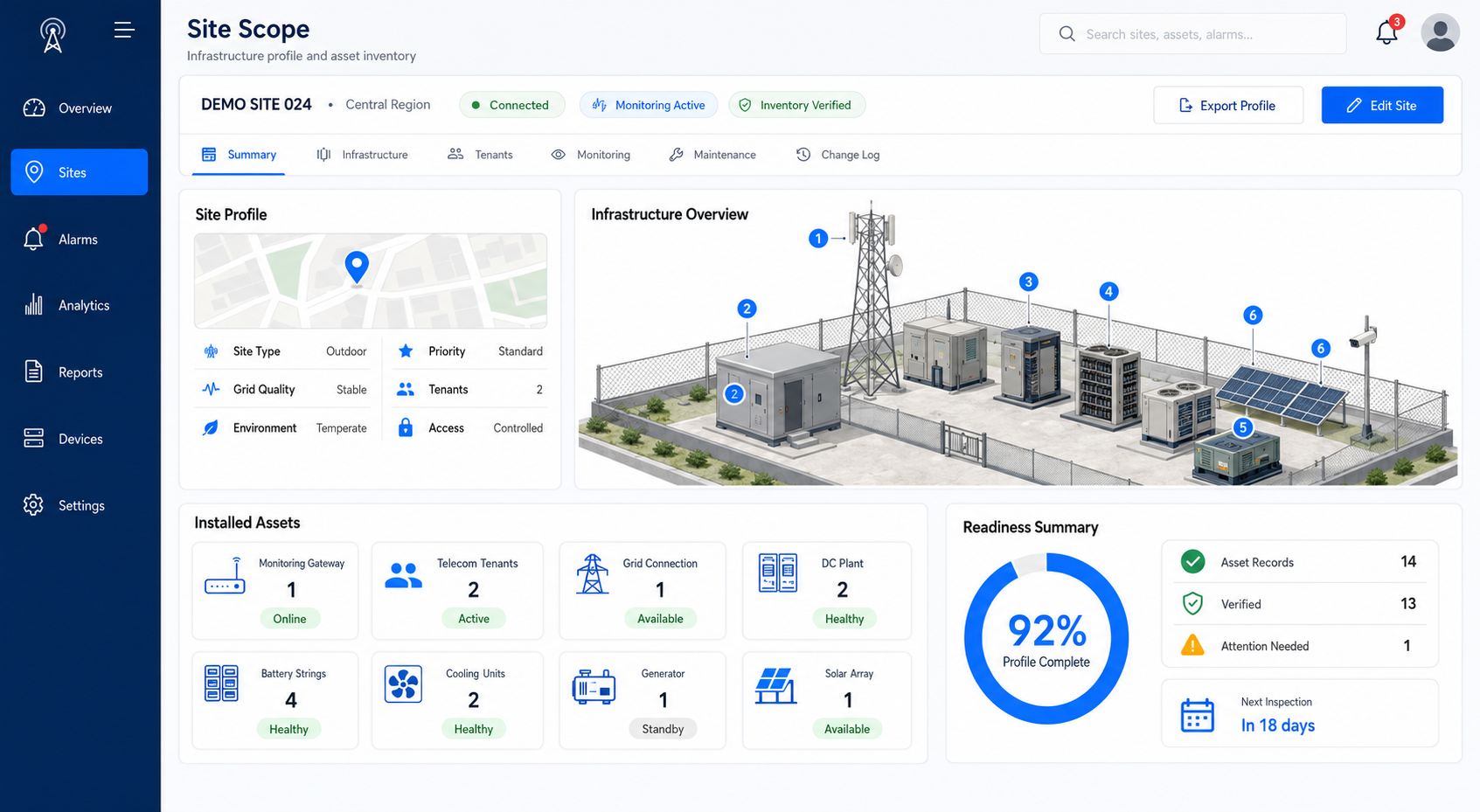
Conducting a comprehensive inventory involves documenting all assets across the telecom network, including cell towers, equipment, power systems, and infrastructure. Each asset’s condition, capacity, and performance metrics are recorded, providing a baseline for asset management efforts. Asset management platforms can streamline this process by centralizing asset information, facilitating easy access, and enabling updates in real time.
- Utilization Analysis:
Utilization analysis entails examining usage patterns and demand forecasts to understand each site’s specific requirements. By collecting data on factors such as traffic volume, network load, and peak usage periods, telecom companies can identify which assets are underutilized or overburdened. This analysis guides asset allocation decisions, ensuring that resources are allocated where they are most needed to optimize network performance and reliability.
- Resource Allocation:
Based on utilization analysis findings, resources such as generators, batteries, and fuel tanks are allocated to each site according to its specific needs. Asset management tools play a crucial role in resource allocation by providing visibility into asset availability, capacity, and utilization levels. Companies can use this data to optimize resource allocation, ensuring sufficient backup power while avoiding over-provisioning, which can lead to unnecessary costs.
- Monitoring and Maintenance:
Implementing a robust monitoring system involves tracking asset performance in real time and proactively addressing potential issues. Asset management platforms facilitate this process by providing tools for monitoring asset health, generating alerts for anomalies or failures, and scheduling preventive maintenance tasks. By staying ahead of potential issues, telecom companies can minimize downtime, optimize asset performance, and extend asset lifespan.
- Data-driven Decision Making:
Utilizing data analytics and predictive modeling enables telecom companies to optimize asset performance and identify opportunities for improvement. Asset management platforms collects and analyze data from various sources, including asset performance metrics, maintenance records, and usage patterns. By leveraging this data, companies can make informed decisions about asset maintenance schedules, upgrades, and investments to maximize efficiency and reliability.
In conclusion, The efficient management of assets is pivotal for uninterrupted connectivity. From cell towers to power systems, each component is indispensable in delivering seamless services to millions worldwide. As the industry gears up for the demands of 5G technology, the importance of meticulous asset management in telecom cannot be overstated.
Telecom assets, including generators and solar panels, form the core infrastructure, necessitating vigilant oversight across global sites. Effective management optimizes resource allocation, balancing efficiency with reliability through data-driven insights. Moreover, asset management ensures compliance with regulations and fosters safety protocols, mitigating risks to personnel and the environment. Strategically, it unfolds through inventory, utilization analysis, resource allocation, and proactive maintenance, all facilitated by centralized platforms.