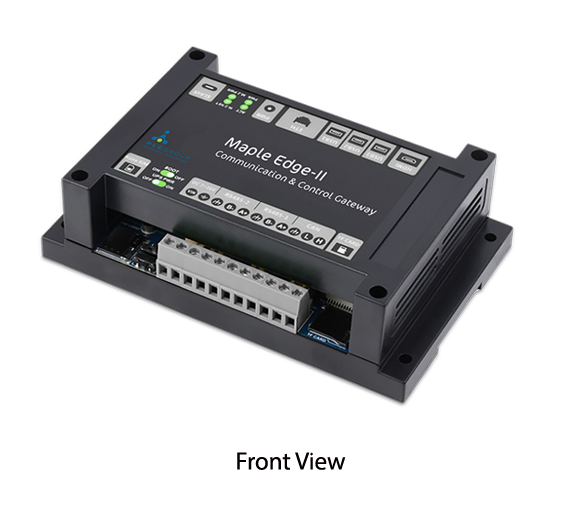
Sensitive infrastructure demands a stable, controlled environment. PLC Group’s advanced remote temperature and humidity sensors deliver precise, real-time data you can trust. By integrating seamlessly with PLC Group controllers and the powerful AxIn Software, your operation gains intelligent automation to proactively adjust to environmental shifts. This unified monitoring ecosystem dramatically reduces unplanned downtime, delivers significant energy efficiency, and enables truly predictive maintenance.
Why Remote Monitoring Matters in Critical Operations
In high-value and mission-critical operations, blind spots are unacceptable. Unmonitored environments lead to significant and costly risks, including:
- Equipment Failure: Overheating and thermal stress that shorten component lifespan.
- Infrastructure Damage: Condensation and high humidity leading to corrosion and short circuits.
- Excessive Costs: Uncontrolled energy consumption from reactive or poorly optimized HVAC systems.
The consequence is compromised reliability and unplanned outages.
What Are PLC Group Remote Monitoring Sensors?
Our range of remote monitoring sensors integrates seamlessly into diverse facility environments, offering continuous measurement, control, and reporting capabilities.
| Solution | Description | Best For |
|---|---|---|
| Temperature Sensors | Capture precise temperature readings in real time with digital calibration and alarm triggers. | Data centers, telecom shelters, and industrial control rooms |
| Humidity Sensors | Maintain balanced humidity levels to protect equipment and materials from corrosion or static damage. | Warehouses, power substations, cleanrooms |
| Integrated Monitoring Systems | Combine temperature, humidity, voltage, and door status sensors into a unified network for complete site visibility. | Telecom base stations, energy plants, facilities management |
| Custom Sensor Deployments | Scalable solutions configured for unique operational or environmental requirements. | Multi-site enterprises and infrastructure networks |
| Fuel Sensor | Measures the fuel level in a tank with high accuracy. | Tracking fuel consumption, preventing theft, monitoring generator fuel levels |
| Motion/Human Presence Sensor | Detects movement or the presence of a person in a defined area. | Site security, detecting unauthorized access, energy saving (auto lights/AC control) |
| DC Voltage and Current Sensor | Monitors direct current (DC) power levels and load. | Telecom sites, solar systems, batteries, and DC-powered equipment health monitoring |
| AC Voltage and Current Sensor | Measures alternating current (AC) power supply and load. | Monitoring generators, grid power quality, AC-powered equipment performance |
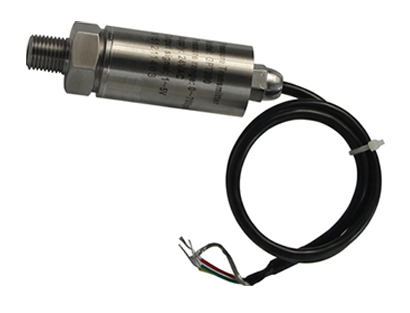
| Air Flow / Differential Pressure Sensor | Tracks air movement and pressure differences in cooling or ventilation systems. | Detecting cooling failures, maintaining proper airflow in shelters, racks, or data centers |
| Noise Level Sensor | Measures sound levels in the environment. | Monitoring generator noise, workplace compliance, detecting unusual activity |
| Air Quality Sensor | Detects pollutants, gases, and overall air quality. | Ensuring safe working environments, monitoring indoor pollution, early gas leak detection |
| Weather Sensor (Wind Speed, Wind Direction, Solar Irradiance Sensor) | Measures environmental conditions such as wind and sunlight intensity. | Planning energy usage, monitoring solar sites, ensuring tower stability and safety |
How PLC Group Remote Monitoring Sensors Work
- Sensing and Collection: Sensors continuously capture temperature and humidity readings with industrial-grade precision.
- Data Gathering: Information is securely transmitted via RS-485 (Modbus RTU), SNMP, or Ethernet to local or cloud based systems.
- Integration with RMC: Data flows directly into PLC Group’s remote monitoring & control (RMC) platform for centralized management.
- Alert Automation: The system issues instant notifications for threshold breaches or environmental anomalies.
- Analytics and Optimization: Historical trend analysis supports energy optimization and predictive maintenance.
Technical Specifications of PLC Group Monitoring Sensors
- Accuracy: ±0.3°C temperature / ±2% RH humidity tolerance.
- Communication Protocols: Supports Modbus RTU, SNMP, and MQTT for seamless interoperability.
- Construction: Industrial housing with IP-rated protection.
- Power: Operates on 12/24V DC with low-power operation.
- Mounting Options: Wall, rack, or cabinet installation.
- Fail-Safe Design: Built-in redundancy with local buffering to prevent data loss.

How do PLC Group Sensors Integrate with the RMC Platform
The RMC Platform serves as the command center for all PLC Group environmental sensors:
- Unified dashboard for site-wide visibility.
- Configurable alarm thresholds and notifications via email, SMS, or SNMP trap.
- Remote firmware updates and configuration management.
- AI-assisted performance analysis to predict faults and reduce maintenance costs.
Why choose PLC Group
- Established Expertise: Operating since 2014 with 10,000+ global deployments.
- Ecosystem-Driven Solutions: Seamless integration across gateways, controllers, and energy meters.
- Proven Reliability: Trusted by Tier 1 telecom operators, data centers, and utility providers.
- Exclusive Partnerships: Authorized value-added reseller for AIRSYS in Canada.
- Data Intelligence: Transforming environmental readings into actionable operational insights.
Industries We Serve
- Telecommunications: Monitor remote shelters and base stations for complete visibility.
- Data Centers: Track rack-level climate to prevent thermal hotspots.
- Utilities & Renewable Energy: Safeguard control rooms and power systems from environmental stress.
- Public Safety Networks: Maintain infrastructure reliability for mission-critical communications.
- Cable Landing Stations: Ensure optimal ambient conditions for subsea connectivity hubs.
- Industrial Facilities: Enable predictive maintenance for high-value machinery.