The Importance of Real-Time Monitoring in Mobile Generator Management

Staying one step ahead of potential problems is crucial in mobile generator management. It takes more than just responding to problems when they pop up to ensure these vital power systems run smoothly and reliably; proactive problem detection and resolution are necessary before disruptions occur. To achieve this, real-time monitoring is essential since it offers priceless insights into the functionality and condition of mobile generators at any given time. Continued monitoring of these important assets and being prepared to notify operators of any indicators of trouble or inefficiency is what real-time monitoring is all about. Not only do the service providers gain from this proactive strategy, but the clients who depend on these generators for their power requirements also benefit. We can see how real-time monitoring is essential to mobile generator management and how it forms the basis for dependable, continuous power supply across numerous applications and sectors.

Optimising Reliability via Continuous Monitoring

Real-time monitoring of variables like temperature, fuel levels, oil pressure, and electrical output provides operators with critical data about the condition and health of their generators. By taking a proactive approach, operators can identify anomalies or possible breakdowns early on and take preventative measures before they become costly disruptions.

Improving operational efficiency through real-time monitoring results in reduced expenses and increased profitability for service providers. Operators can optimize the use of mobile generator assets by minimizing downtime through proactive maintenance and immediate action. Furthermore, real-time monitoring facilitates predictive maintenance, which increases equipment longevity and reduces the need for premature replacements and related capital costs.

Data-Driven Decision Making

A range of data can be collected by real-time monitoring, which can be used to guide strategic decision-making. Operators may decide on maintenance schedules, equipment upgrades, and resource allocation by looking at patterns, and trends, and forecasting future performance based on historical data. In the end, data-driven decision-making improves the overall resilience and efficiency of mobile generator management by helping operators stay ahead of emerging difficulties, optimize operating strategies, and allocate resources efficiently.

Fast, Proactive Service Response

Service providers can remotely access diagnostic information and quickly spot potential faults thanks to real-time monitoring capabilities. This gives them the ability to start troubleshooting processes right away or send out technicians who have the right equipment and knowledge. Service providers can reduce disruptions, preserve client satisfaction, and preserve their reputation for responsiveness and dependability by promptly resolving issues.

Decreased Cost of Ownership for the Customer

Real-time monitoring results in real benefits for clients using mobile generator systems, like lower total cost of ownership. Through the reduction of unexpected faults and improvement of service plans, clients may avoid expensive repairs, urgent assistance inquiries, and possible revenue reductions via inactivity. Real-time monitoring improves clients’ trust by offering them access to system performance and reliability parameters. This assures them of seamless operations even in the midst of unforeseen issues. Furthermore, real-time monitoring’s proactive approach reflects a dedication to client success, building strong relationships, and increasing client retention.

Optimizing Fuel Efficiency and Sustainability

A real-time monitoring system allows operators to precisely track fuel use and optimize generator performance to achieve maximum efficiency. By analyzing fuel use patterns, operators can identify ways to minimize waste, reduce emissions, and lower operating costs. Fuel theft is one of the major challenges these days because of high fuel costs, this issue is becoming increasingly relevant. The solution enables the detection of fuel theft or misuse and the appropriate response to the situation.

Driving Profitability through Operational Optimization

Improving operational efficiency through real-time monitoring results in reduced costs and increased profitability for service providers. Operators can optimize the use of mobile generator assets by minimizing downtime through proactive maintenance and rapid response. Furthermore, real-time monitoring facilitates predictive maintenance, which increases equipment longevity and reduces the need for premature replacements and related capital costs.

Regulatory Compliance and Carbon Footprint Reduction

Compliance with industry norms and government regulations is crucial in a setting where regulations are becoming increasingly stringent. In addition to reducing carbon emissions, real-time monitoring systems offer the tools and abilities required to guarantee compliance with legal obligations and reporting guidelines. Operators may actively reduce their carbon footprint while demonstrating compliance with safety requirements, environmental laws, and operating norms by tracking emissions, fuel usage, and other critical indicators in real time. Moreover, the documentation process is streamlined by real-time reporting capabilities, which reduces the possibility of non-compliance fines and streamlines compliance audits.

In addition to being a technology innovation, the use of real-time monitoring solutions in mobile generator management is strategically necessary for both operators and service providers. Organizations can achieve numerous advantages beyond enhancing operational efficiency and dependability by utilizing real-time data analytics, proactive maintenance, and remote accessibility.  Delivering reliable, continuous power is essential for maintaining and satisfying customers. In addition to increasing mobile generator systems’ dependability, real-time monitoring shows a dedication to preventative maintenance and assistance. Service providers can establish enduring connections, create confidence, and reaffirm their status as preferred partners in mobile power solutions by continuously meeting or beyond consumer expectations. Conclusively, real-time monitoring is a vital part of mobile generator management, providing multiple benefits to both service providers and their clients. The significance of real-time monitoring cannot be emphasized, from guaranteeing equipment reliability and quick service response to boosting profitability and client retention. Adopting the generator monitoring and control solution helps the mobile generator sector grow and succeed sustainably while also protecting against future interruptions.

PLC Group’s Mobile Generator Monitoring and Control Solution is an excellent example of innovation, providing unique ease of use and significant cost savings. Designed with the customer in mind, this innovative solution streamlines generator management while providing substantial value via its subscription-based pricing model

which offers flexibility and scalability tailored to the needs of each customer by eliminating upfront capital investments and providing a predictable monthly fee

. The PLC Group’s solution is an easy interface that allows customers to easily monitor and control mobile generators from anywhere, at any time. Operators can confidently make informed decisions thanks to user-friendly dashboards and streamlined navigation that provide easy access to real-time data, diagnostic tools, and predictive analytics.

The Importance of Asset Management in the Telecom Sector

In the fast-paced world of telecommunications, where connectivity is most important and downtime is not an option, efficient management of assets is paramount. From cell towers to power systems, every component of the telecom infrastructure plays a critical role in delivering seamless communication services to millions of users worldwide. With energy consumption responsible for over 92% of telecommunications network operating costs, and the emergence of 5G technology set to drive unprecedented increases in consumption, the importance of asset management in the telecom sector cannot be overstated.

Understanding Telecom Assets

Telecommunications infrastructure encompasses a myriad of assets, each playing a vital role in maintaining network connectivity and reliability. Among these assets are generators, batteries, solar panels, grid connections, DC systems, and fuel tanks. These components collectively power the backbone of the telecom network, providing the necessary infrastructure to support communication services for millions of users.

With a network spanning thousands of sites, each with its unique set of demands and challenges, telecom companies face a daunting task in managing their assets effectively. The key lies in optimizing asset utilization at specific sites to ensure reliable performance while minimizing operational costs and resource wastage.

Importance of Asset Management

  • Optimal Resource Allocation: Asset management enables telecom companies to allocate resources judiciously based on the specific needs and utilization patterns of each site. By analyzing usage data and demand forecasts, companies can deploy assets strategically to meet power requirements without overburdening or underutilizing resources.
  • Maximizing Efficiency: Effective asset management ensures that assets are utilized to their full potential, thereby maximizing operational efficiency and minimizing waste. By monitoring asset performance and implementing maintenance schedules, companies can prevent downtime and optimize the lifespan of critical equipment.
  • Ensuring Reliability: In an industry where reliability is paramount, asset management plays a crucial role in ensuring uninterrupted service delivery. By proactively monitoring asset health and addressing potential issues before they escalate, telecom companies can minimize service disruptions and enhance customer satisfaction.
  • Compliance and Safety: Asset management practices help ensure compliance with regulatory requirements and safety standards. By adhering to industry best practices and conducting regular inspections, companies can mitigate risks and ensure the safety of personnel and the surrounding environment.

Strategies for effective asset management

  1. Asset Inventory and Assessment:

Conducting a comprehensive inventory involves documenting all assets across the telecom network, including cell towers, equipment, power systems, and infrastructure. Each asset’s condition, capacity, and performance metrics are recorded, providing a baseline for asset management efforts. Asset management platforms can streamline this process by centralizing asset information, facilitating easy access, and enabling updates in real time.

  1. Utilization Analysis:

Utilization analysis entails examining usage patterns and demand forecasts to understand each site’s specific requirements. By collecting data on factors such as traffic volume, network load, and peak usage periods, telecom companies can identify which assets are underutilized or overburdened. This analysis guides asset allocation decisions, ensuring that resources are allocated where they are most needed to optimize network performance and reliability.

  1. Resource Allocation:

Based on utilization analysis findings, resources such as generators, batteries, and fuel tanks are allocated to each site according to its specific needs. Asset management tools play a crucial role in resource allocation by providing visibility into asset availability, capacity, and utilization levels. Companies can use this data to optimize resource allocation, ensuring sufficient backup power while avoiding over-provisioning, which can lead to unnecessary costs.

  1. Monitoring and Maintenance:

Implementing a robust monitoring system involves tracking asset performance in real time and proactively addressing potential issues. Asset management platforms facilitate this process by providing tools for monitoring asset health, generating alerts for anomalies or failures, and scheduling preventive maintenance tasks. By staying ahead of potential issues, telecom companies can minimize downtime, optimize asset performance, and extend asset lifespan.

  1. Data-driven Decision Making:

Utilizing data analytics and predictive modeling enables telecom companies to optimize asset performance and identify opportunities for improvement. Asset management platforms collects and analyze data from various sources, including asset performance metrics, maintenance records, and usage patterns. By leveraging this data, companies can make informed decisions about asset maintenance schedules, upgrades, and investments to maximize efficiency and reliability.

In conclusion, The efficient management of assets is pivotal for uninterrupted connectivity. From cell towers to power systems, each component is indispensable in delivering seamless services to millions worldwide. As the industry gears up for the demands of 5G technology, the importance of meticulous asset management in telecom cannot be overstated.

Telecom assets, including generators and solar panels, form the core infrastructure, necessitating vigilant oversight across global sites. Effective management optimizes resource allocation, balancing efficiency with reliability through data-driven insights. Moreover, asset management ensures compliance with regulations and fosters safety protocols, mitigating risks to personnel and the environment. Strategically, it unfolds through inventory, utilization analysis, resource allocation, and proactive maintenance, all facilitated by centralized platforms.

Sustainability Management and Some of the Best Practices of Sustainability Management

According to Deloitte, 75% of organizations increased their investment in sustainability in 2023, with nearly 20% indicating a significant rise in their commitment to sustainability initiatives. This indicates a growing awareness of the need to address environmental challenges and social responsibilities. As industries grapple with the implications of climate change and social inequalities, sustainability management has become more than just a moral obligation—it’s a strategic imperative for driving business success.

One of the key drivers of the shift towards sustainability management is the growing significance of Environmental, Social, and Governance (ESG) factors in corporate performance. Seventy-one percent of C-suite and functional leaders anticipate a growing significance of ESG in corporate performance. This underscores the importance of integrating ESG considerations into business strategies and operations to enhance long-term value creation.

Additionally, the rise of mandatory sustainability reporting further emphasizes the importance of sustainability management for businesses. Almost 50,000 companies will be subject to mandatory sustainability reporting in 2024, highlighting the need for transparency and accountability in addressing environmental and social impacts.

Understanding Sustainability Management

Sustainability management involves the strategic integration of environmental, social, and economic considerations into decision-making processes. It encompasses a range of practices aimed at minimizing negative impacts on the planet and society while maximizing positive outcomes. From reducing carbon emissions and conserving natural resources to promoting ethical labor practices and supporting community development, sustainability management encompasses a broad spectrum of activities.

Energy management software, along with Sustainability Reporting software solutions, can significantly contribute to sustainability management by providing tools and insights to monitor, analyze, and optimize various aspects of environmental performance.

Best Practices for Sustainability Management Solutions:

Actionable Intelligence (AxIn) Platform

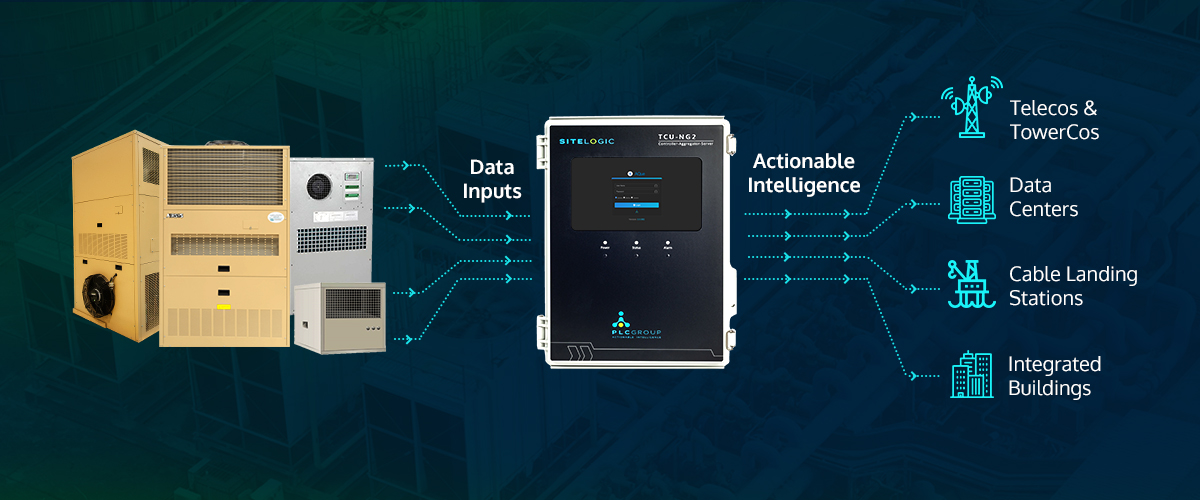
The Actionable Intelligence (AxIn) Platform offered by PLC Group provides a comprehensive solution for achieving complete facility transformation through data-driven smart decisions. This innovative platform utilizes existing data from third-party sources, eliminating the need for additional hardware deployment, and harnesses the power of Machine Learning and Artificial Intelligence (AI).

Ideal for: Facilities transformation and Sustainability Management through data-driven decision-making

Key features

  • AxIn provides complete control over Sustainability Management.
  • Carbon tracking: Monitors and manages carbon emissions and sustainability initiatives.
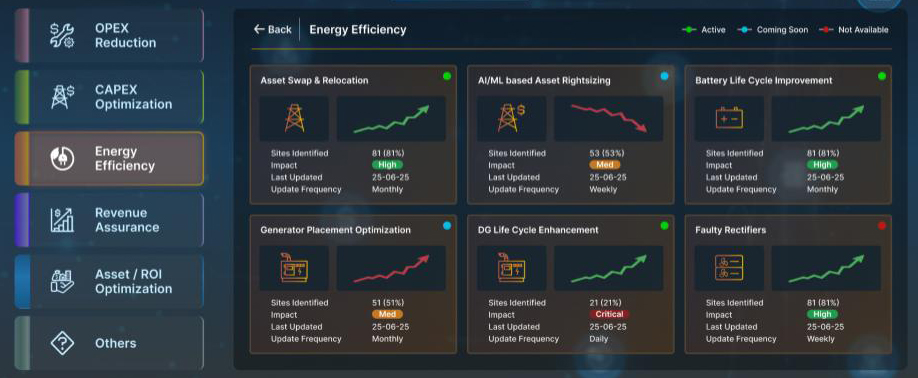
  • Enables monitoring and management of energy infrastructure, offering predictive site outage alarms and data-driven root cause analysis for issue resolution.
  • Provides holistic performance analysis and dynamic energy target allocation based on real-time and historical trends.
  • Offers data-driven power source profiling, demand forecasting, and health analysis for optimized power source management.
  • Aids in real-time asset lifecycle monitoring, tracking, and analysis, with capabilities for identifying infrastructure optimization opportunities and facilitating asset relocation.

EnergyCAP

Formerly known as Wattics, is an innovative energy management software designed to streamline utility bill processing, tracking, and reporting. This tool centralizes energy data, providing comprehensive insights to optimize consumption, identify savings, and ensure regulatory compliance. With its user-friendly interface and robust reporting tools, EnergyCAP empowers organizations to make informed decisions for effective energy management strategies.

Ideal for: Managing utility bills efficiently.

Key features

  • Utility bill management: Simplifies the processing, validation, and payment of utility bills.
  • Data tracking: Centralizes energy and utility data for thorough analysis.
  • Budgeting and forecasting: Facilitates forecasting and budgeting for energy expenses.
  • Benchmarking: Compares energy usage with industry standards to evaluate performance.
  • Carbon tracking: Monitors and manages carbon emissions and sustainability initiatives.

Smarkia

Smarkia is a cutting-edge energy management platform designed to provide real-time insights for optimizing energy consumption. It aggregates data from multiple sources, allowing for thorough analysis to improve efficiency and reduce costs.

Ideal for: Managing energy consumption data effectively.

Key features

  • Data aggregation: Gathers information from diverse sources for thorough analysis.
  • Advanced analytics: Offers sophisticated tools for making informed decisions.
  • Predictive analysis: Forecasts energy usage patterns and trends.
  • Cost optimization: Identifies opportunities to minimize energy costs and waste.
  • Carbon footprint tracking: Monitors and manages carbon emissions to promote sustainability.

Inavitas

Inavitas specializes in renewable energy software, providing innovative solutions for energy management and optimization. Their platform integrates AI-driven analytics to enhance efficiency in renewable energy generation, storage, and consumption. With a strong focus on sustainability, Inavitas empowers businesses to effectively utilize clean energy, contributing to a greener future.

Ideal for: Managing renewable energy resources.

Key features

  • AI-driven analytics: Harnesses AI for comprehensive analysis of renewable energy systems.
  • Renewable energy optimization: Maximizes efficiency in generation, storage, and consumption of renewable energy.
  • Monitoring and control: Offers real-time monitoring and remote control of renewable energy assets.
  • Forecasting: Provides predictive modeling for renewable energy production and usage.
  • Sustainability metrics: Tracks and reports on sustainability efforts and carbon footprint reduction.

Latest blog

Discover expert advice and
solutions news

Collaboration Form

Connect with Our Experts


For Sales and Partnership:


+ 1 855 PLCGRUP (752 4787) Press 3