Telecom operators manage hundreds of dispersed sites that depend on reliable power, cooling, and secure connectivity. Fragmented systems create data silos, making it hard to maintain visibility and consistent performance.
PLC Group delivers an end-to-end solution that unifies hardware, intelligent controllers, and analytics into a single platform—enabling real-time monitoring, AI-driven insights, and efficient control to maximize uptime, boost energy efficiency, and extend equipment life across all sites.
Telecom sites operate in demanding environments where power issues, sensor faults, and environmental changes can quickly disrupt service. Relying on manual inspections increases costs and slows response times.

PLC Group’s integrated solutions centralize monitoring, automation, and analytics into one platform—synchronizing all equipment, enabling secure remote oversight, and supporting faster, smarter decisions to maintain service-level performance.
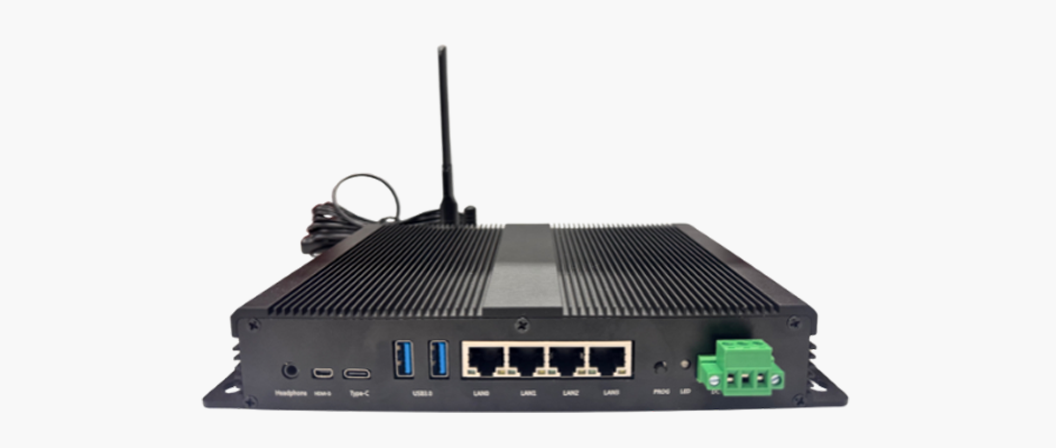
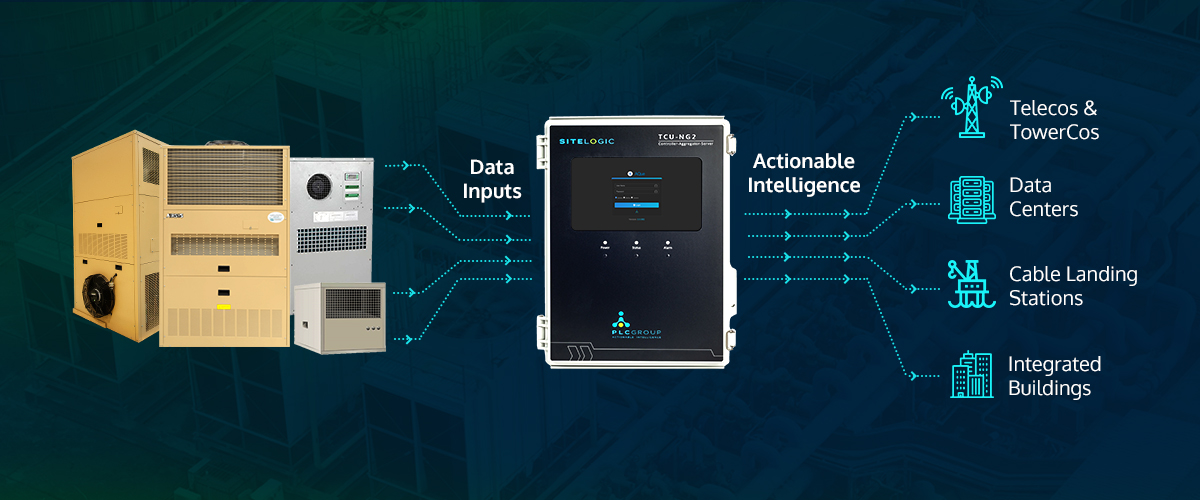
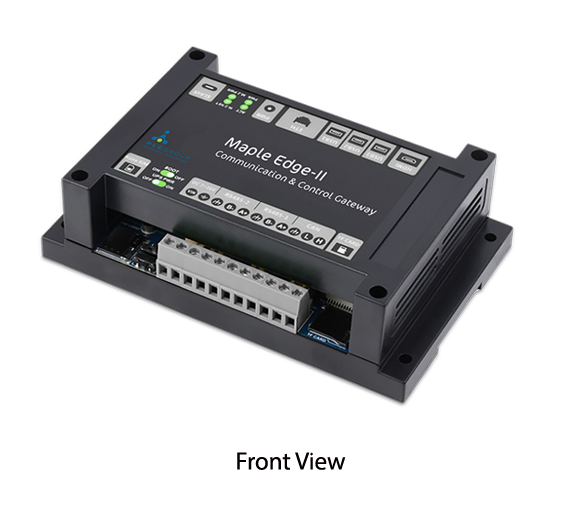
The telecom management solution operates as the intelligence layer within the network. It communicates with energy meters, cooling systems, and sensors via Modbus RTU, Modbus TCP/IP, SNMP, and MQTT. Information flows into the AxIn Actionable Intelligence Platform, which transforms operational data into predictive insights.
Process overview:
This closed-loop framework enables full telecom tower monitoring and seamless orchestration of intelligent and non-intelligent equipment.

As a leader among telecommunications infrastructure companies, PLC Group delivers interoperable systems that combine intelligent control, field reliability, and actionable analytics. Our platform is trusted by telecom equipment suppliers, operators, and utility networks to unify operations and strengthen resilience.
For scalable, secure, and data-driven management of your telecommunications assets, contact PLC Group to discover how our integrated platform enhances network reliability and operational intelligence.

By combining real-time monitoring, AI-based fault detection, and automated control, the system identifies abnormal conditions early, preventing unplanned downtime across telecom sites.
Yes. The platform supports Modbus, SNMP, BACnet, and MQTT, allowing smooth integration with legacy or intelligent devices and third-party management systems.
Data transmission uses TLS encryption, role-based access, and authentication protocols compliant with IEC 62351, ensuring complete protection for mission-critical environments.
Through connected sensors and controllers, tower conditions—including temperature, humidity, and power load—are monitored in real time, with alarms automatically routed to the network operations center.
The architecture supports hierarchical expansion, enabling centralized control for a few towers or thousands across regions with consistent dashboards and configuration templates.
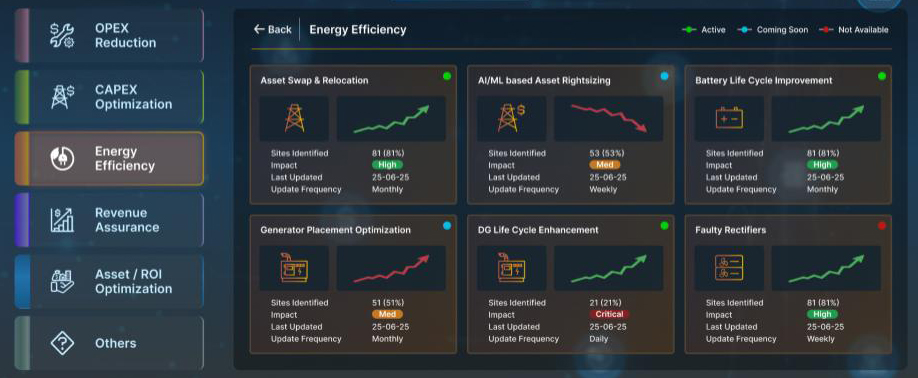
AI-based analytics identify inefficient equipment cycles, optimize HVAC and power usage, and reduce unnecessary maintenance visits—resulting in measurable OPEX savings.
Yes. It synchronizes with solar, diesel, and grid sources, balancing load distribution and optimizing generator runtime for higher energy efficiency.
Support includes continuous software updates, performance audits, and remote diagnostics through the RMC platform, ensuring long-term operational stability.
Automated reports summarize energy efficiency, uptime, and alarm events. Data can be exported or shared securely via APIs for enterprise analytics or regulatory submissions.
Telecom operators, utilities, public safety networks, and data center operators deploy the system to maintain uptime, energy efficiency, and SLA compliance in high-availability facilities.