
According to Deloitte, 75% of organizations increased their investment in sustainability in 2023, with nearly 20% indicating a significant rise in their commitment to sustainability initiatives. This indicates a growing awareness of the need to address environmental challenges and social responsibilities. As industries grapple with the implications of climate change and social inequalities, sustainability management has become more than just a moral obligation—it’s a strategic imperative for driving business success.
One of the key drivers of the shift towards sustainability management is the growing significance of Environmental, Social, and Governance (ESG) factors in corporate performance. Seventy-one percent of C-suite and functional leaders anticipate a growing significance of ESG in corporate performance. This underscores the importance of integrating ESG considerations into business strategies and operations to enhance long-term value creation.
Additionally, the rise of mandatory sustainability reporting further emphasizes the importance of sustainability management for businesses. Almost 50,000 companies will be subject to mandatory sustainability reporting in 2024, highlighting the need for transparency and accountability in addressing environmental and social impacts.
Understanding Sustainability Management
Sustainability management involves the strategic integration of environmental, social, and economic considerations into decision-making processes. It encompasses a range of practices aimed at minimizing negative impacts on the planet and society while maximizing positive outcomes. From reducing carbon emissions and conserving natural resources to promoting ethical labor practices and supporting community development, sustainability management encompasses a broad spectrum of activities.
Energy management software, along with Sustainability Reporting software solutions, can significantly contribute to sustainability management by providing tools and insights to monitor, analyze, and optimize various aspects of environmental performance.
Best Practices for Sustainability Management Solutions:
Actionable Intelligence (AxIn) Platform
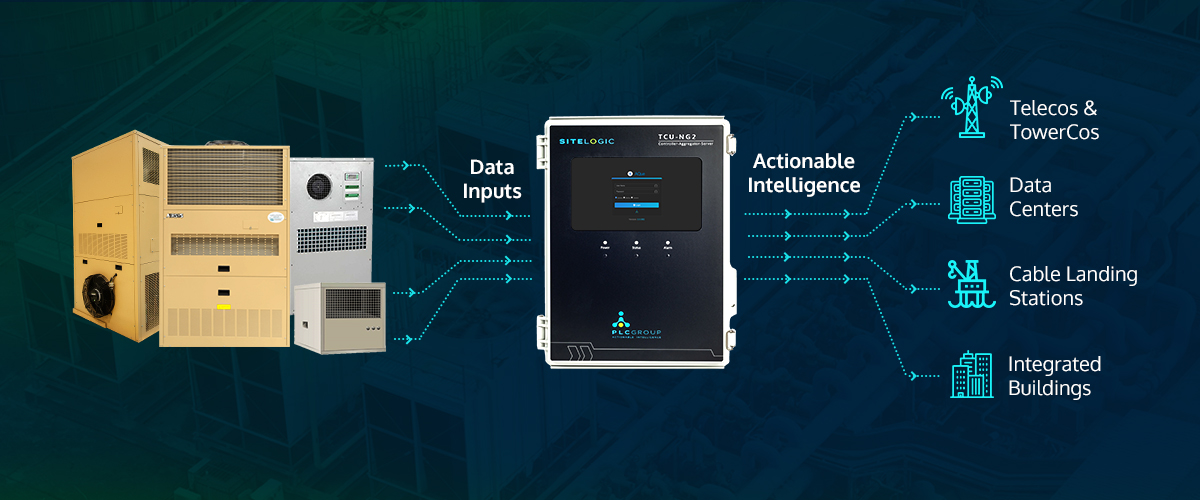
The Actionable Intelligence (AxIn) Platform offered by PLC Group provides a comprehensive solution for achieving complete facility transformation through data-driven smart decisions. This innovative platform utilizes existing data from third-party sources, eliminating the need for additional hardware deployment, and harnesses the power of Machine Learning and Artificial Intelligence (AI).
Ideal for: Facilities transformation and Sustainability Management through data-driven decision-making
Key features
- AxIn provides complete control over Sustainability Management.
- Carbon tracking: Monitors and manages carbon emissions and sustainability initiatives.
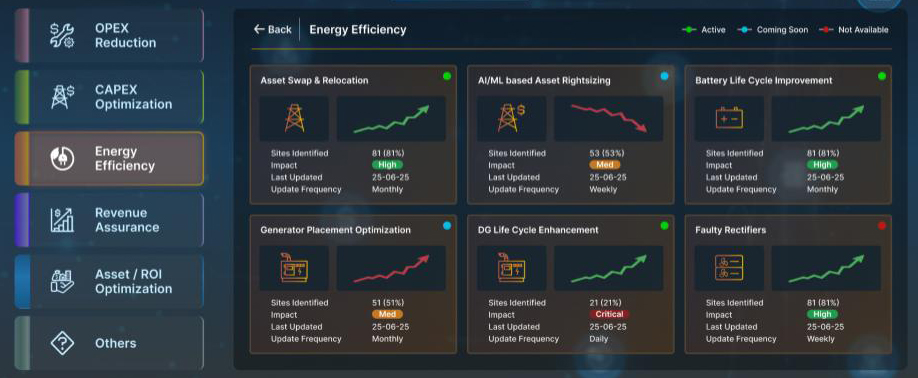
- Enables monitoring and management of energy infrastructure, offering predictive site outage alarms and data-driven root cause analysis for issue resolution.
- Provides holistic performance analysis and dynamic energy target allocation based on real-time and historical trends.
- Offers data-driven power source profiling, demand forecasting, and health analysis for optimized power source management.
- Aids in real-time asset lifecycle monitoring, tracking, and analysis, with capabilities for identifying infrastructure optimization opportunities and facilitating asset relocation.
EnergyCAP
Formerly known as Wattics, is an innovative energy management software designed to streamline utility bill processing, tracking, and reporting. This tool centralizes energy data, providing comprehensive insights to optimize consumption, identify savings, and ensure regulatory compliance. With its user-friendly interface and robust reporting tools, EnergyCAP empowers organizations to make informed decisions for effective energy management strategies.
Ideal for: Managing utility bills efficiently.
Key features
- Utility bill management: Simplifies the processing, validation, and payment of utility bills.
- Data tracking: Centralizes energy and utility data for thorough analysis.
- Budgeting and forecasting: Facilitates forecasting and budgeting for energy expenses.
- Benchmarking: Compares energy usage with industry standards to evaluate performance.
- Carbon tracking: Monitors and manages carbon emissions and sustainability initiatives.
Smarkia
Smarkia is a cutting-edge energy management platform designed to provide real-time insights for optimizing energy consumption. It aggregates data from multiple sources, allowing for thorough analysis to improve efficiency and reduce costs.
Ideal for: Managing energy consumption data effectively.
Key features
- Data aggregation: Gathers information from diverse sources for thorough analysis.
- Advanced analytics: Offers sophisticated tools for making informed decisions.
- Predictive analysis: Forecasts energy usage patterns and trends.
- Cost optimization: Identifies opportunities to minimize energy costs and waste.
- Carbon footprint tracking: Monitors and manages carbon emissions to promote sustainability.
Inavitas
Inavitas specializes in renewable energy software, providing innovative solutions for energy management and optimization. Their platform integrates AI-driven analytics to enhance efficiency in renewable energy generation, storage, and consumption. With a strong focus on sustainability, Inavitas empowers businesses to effectively utilize clean energy, contributing to a greener future.
Ideal for: Managing renewable energy resources.
Key features
- AI-driven analytics: Harnesses AI for comprehensive analysis of renewable energy systems.
- Renewable energy optimization: Maximizes efficiency in generation, storage, and consumption of renewable energy.
- Monitoring and control: Offers real-time monitoring and remote control of renewable energy assets.
- Forecasting: Provides predictive modeling for renewable energy production and usage.
- Sustainability metrics: Tracks and reports on sustainability efforts and carbon footprint reduction.