What is PUE (Power Usage Effectiveness)?

A data center’s energy efficiency can be determined using the PUE (Power Usage Effectiveness) metric. In other words, Power Usage Effectiveness calculates the ratio of total energy consumed to the total energy used by only the IT equipment alone in order to assess the energy performance of the data center.

The data center’s architecture, occupancy rate, and other factors, such as the outdoor temperature, all influence Power Usage Effectiveness.

Given the amount of heat that a data center produces, it is simple to realize that the energy used to cool the computer rooms accounts for a significant portion of a data center’s Power Usage Effectiveness. Less significantly included in the figure are energy supply, illumination, monitoring, and security.

How to Calculate PUE?

PUE is the ratio of the amount of power needed to drive and cool the data center compared to the power drawn from the IT equipment in the data center.

Expressed as a formula, PUE is calculated as such:

PUE = Total Facility Energy / IT Equipment Energy

What is a Good PUE ratio?

A PUE of 1.0 denotes a 100% efficient data center, however, for most, this is not a practical goal. But some of the most environmentally friendly data centers in the world are getting there.

The average PUE, according to Uptime Institute, is 1.58. Your objective should be to lower yourself if you are currently above it.

Every data center will have a varied target Power Usage Effectiveness due to its distinct locations, climates, technologies, and equipment. PUE goals for new buildings with cutting-edge cooling and IT systems should range from 1.2 to 1.4. Aim to keep existing data center footprints under 1.5.

How Can I Improve PUE?

You can take the following actions to improve your data center’s energy efficiency and lower your Power Usage Effectiveness:

Install sensors and meters in your data center:

You may get vital information about what’s occurring in your data center via power and environmental sensors. Environment sensors help verify that your equipment is functioning within recommended ranges and power meters can input data into your management software to streamline Power Usage Effectiveness calculations.

Create alerts and thresholds for your sensor and meter data:

Modern data center management technologies gather, archive, report, and alert on this data so that you are aware of possible problems as soon as they arise, allowing you to fix them and maintain high levels of efficiency.

Raise temperatures safely:

Overcooling is money and energy waste. You can pinpoint exactly where and by how much you are overcooling equipment by keeping an eye on your environment. Then, without going over the manufacturer or industry standards like ASHRAE, you can increase your temperature setpoints until you are operating at maximum efficiency.

Put hot/cold aisle confinement into practice:

To prevent your cooling system from wasting energy cooling air that is already cold, avoid combining hot exhaust air with cold supply air. Your energy usage will be significantly reduced by containment measures, which will also boost cooling capacity and free up more power for IT equipment.

Equipment should be virtualized or combined:

You can decrease the amount of space, power, and cooling capacity you require by reducing the number of physical assets in your data center. Up to 30% of servers in a typical data center are ghost servers, consuming energy without serving any purpose. You can more simply condense your data center or virtualize the remaining servers by identifying and removing them.

Customers are billed for the energy they utilize:

By charging your internal or external customers for the energy their equipment uses, you may promote an environment of energy awareness and accountability. Your PUE will increase when customers start to care more about energy efficiency because it affects their bottom line.

Think about cutting-edge cooling techniques:

High-efficiency cooling techniques for high-density racks, like liquid cooling and immersion cooling, are gaining popularity. Find out which of your alternatives is best for your data center by doing some research.

Smart Universal HVAC Controller for Telecom and Data Centres

HVAC systems form an important part of telecom and data centers as they help to maintain optimal network temperature. Many of the existing HVAC components are stand-alone and work on unbalanced schedules. This increases the load on most of the HVAC units leading to increased wear and tear, overconsumption of energy.

In the traditional model, HVAC controllers are non-intelligent and incapable of relaying useful information to the operators. In some cases, although there are intelligent controllers, they will usually be from different vendors and transfer only limited information. Also, such devices lack interoperability with the central processor due to the difference in the communication protocol.

Due to these reasons, such HVAC controllers can be configured and controlled only on the site, by local installation and management personnel. This poses a serious threat to remote accessibility and maintenance, delaying the execution of quick actions and precautionary measures.

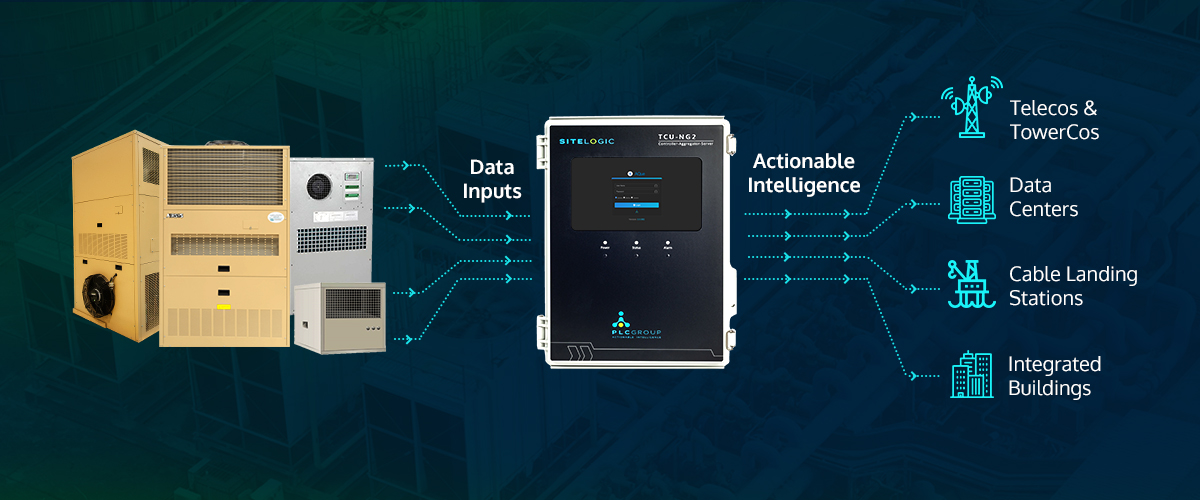
Newer technologies like AI, IoT, ML, and Big Analytics can be exploited to make HVAC controllers smarter. PLC has developed an HVAC controller that addresses most of these issues by communicating effectively with both intelligent and non-intelligent HVACs. PLC Group equips non-intelligent HVACs with smart sensors and then connects all the HVAC monitoring components at the Mission Critical facility. This removes the need for multiple HVAC controllers and facilitates data collection from every node of the network.

PLC’s smart universal HVAC controller is equipped with a multi-communication protocol to ensure cross-platform compatibility. It digitally integrates hardware and software with analytics and actionable intelligence. The collected data is relayed in real-time to the centralized monitoring system to facilitate remote analysis. Agile technologies are used to observe definite patterns exhibited by the collected information.

Installers, technicians, maintenance personnel, service providers, and others can access the data remotely. All modules can be configured and controlled using a single interface. The staff can examine the anomalies and can take quick corrective actions well in advance. This predictive maintenance optimizes the performance of HVACs while lowering their energy consumption.

This smart universal HVAC controller is also able to integrate with weather forecasting which helps to modify the settings with respect to changing temperatures. This results in reduced operational load and decreased fuel consumption.

Smart universal HVAC controllers optimize the temperature of the telecom and data centers under various conditions. This ensures adequate cooling for critical components and optimizes energy utilization, reduces network downtime, and lowers maintenance expenditure.

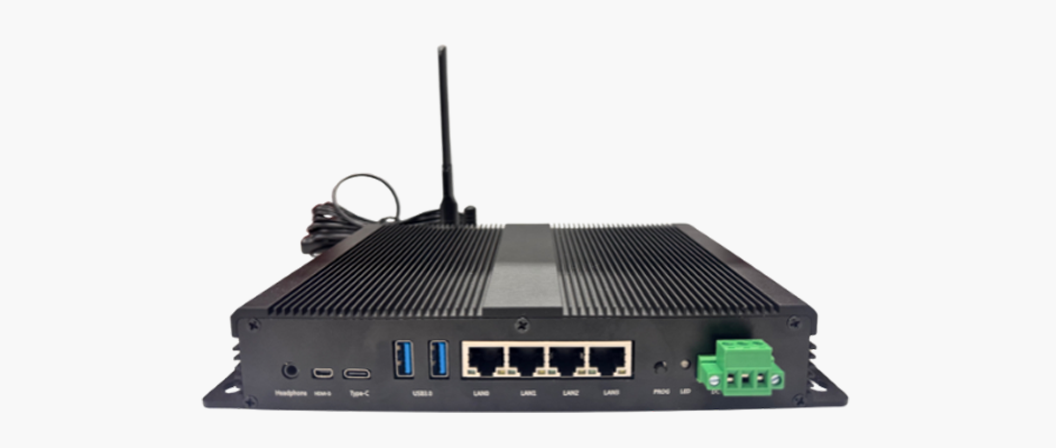
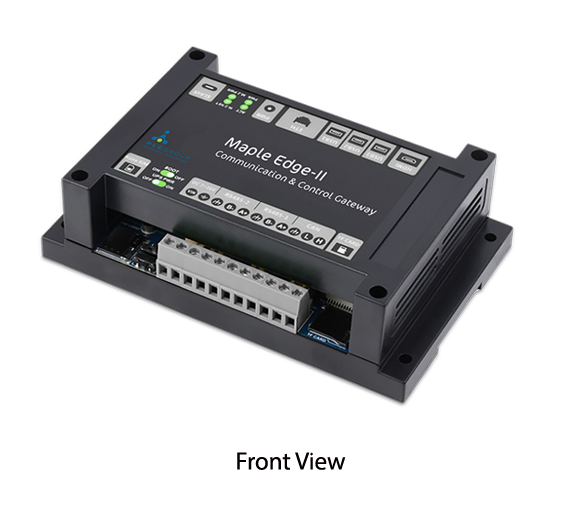
This controller supports various protocols including Modbus RTU/TCP, CAN, SNMP and BACnet. It establishes communication with remote devices via Ethernet, serial, or wireless means. Most of them are fitted with a large LCD panel that displays all the configured parameters.

This smart universal HVAC controller is a single-box solution that enhances the visibility of facility infrastructure. It can be configured either at the workstation through the use of an offline computer or remotely via web-enabled devices such as mobiles and laptops. It provides all necessary information at your fingertips and acts as an early warning system by conveying real-time notifications for operational errors and malfunctions.

Conclusion

The use of smart universal HVAC controllers is a comprehensive solution that aids the service providers to achieve optimal performance while ensuring business growth and profitability. It not only reduces the expenditure but also adds value to the infrastructure by ensuring better utilization of energy and aiding remote operation and maintenance.

Cooling as a Service (CaaS) for Data Centres and Telecom Companies

Telecommunications networks and data centres operate 24/7 to assure reliable and secure transfer of information which requires a huge amount of energy, that gets wasted in the form of heat rather than being used for data transfer. Further, maintenance of optimal temperature is critical for ensuring maximum device efficiency. Due to these factors, Heating, Ventilation and Air Conditioning (HVAC) systems form an integral part of data centres and telecom companies.

HVAC systems also require energy which may increase the carbon footprint considerably. Also, conventional HVAC units require regular maintenance for satisfactory working. This accounts for significant financial expenditure. However, recent developments in the technological field can help in reducing CAPEX and OPEX, while minimizing the emission of harmful gases.

PLC’s Cooling as a Service (CaaS)

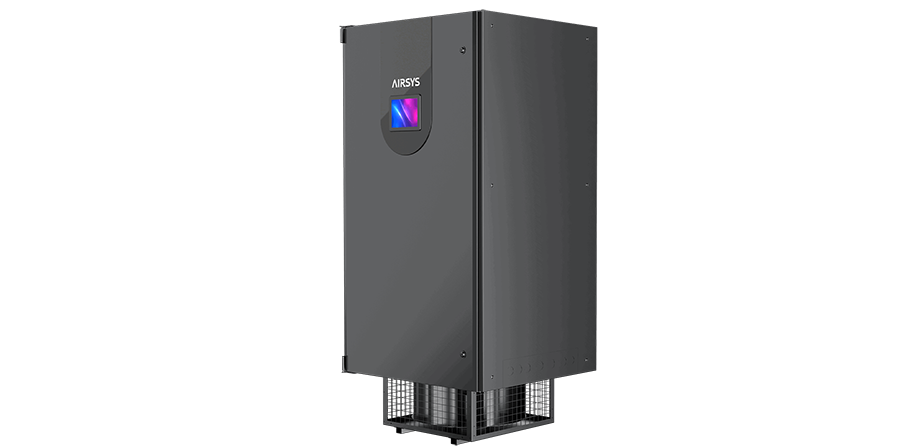
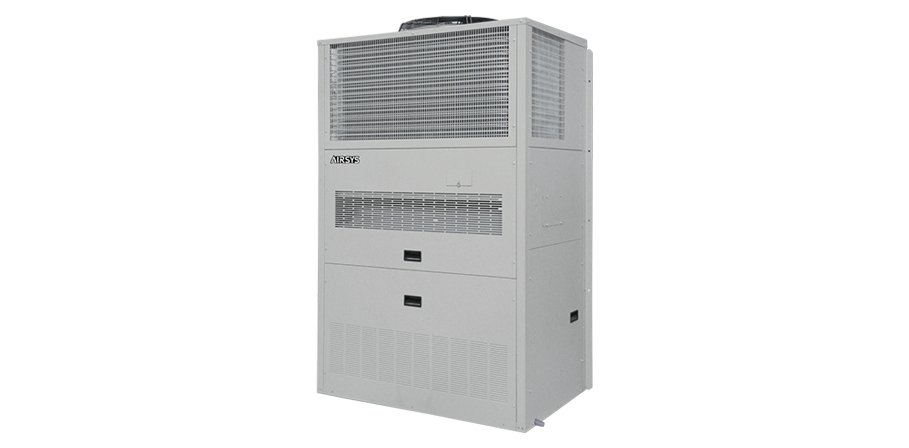
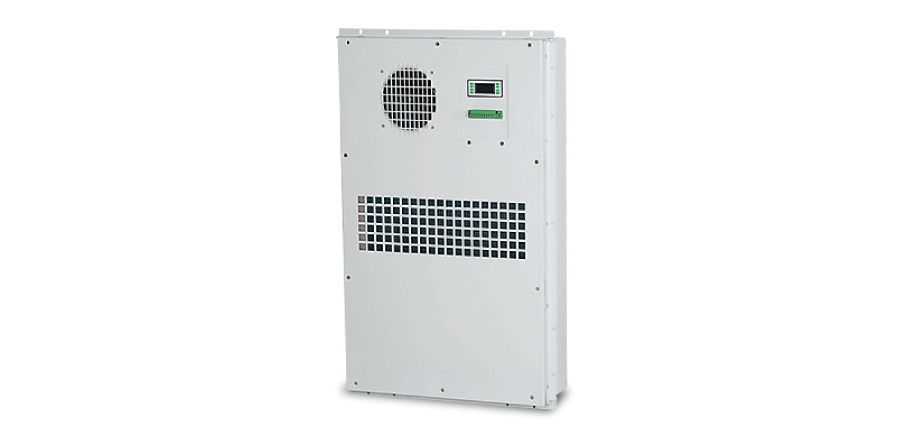
PLC, in conjunction with AIRSYS, offers a wide range of information and communication technology cooling systems. This includes wall-mounted HVACs, free air-cooling units, cabinet cooling units, and computer room air conditioners. These units are innovatively designed to operate at maximum efficiency with minimal power consumption.

PLC’s CaaS model is flexible, highly adaptable, and can be scaled to best suit the requirement. It facilitates the upgrade of existing cooling systems with zero capital investment. CaaS model integrates many agile technologies like IoT, AI, ML, and Data Analytics to render state-of-art performance. It employs smart sensors at various nodes to collect precise operational parameters like IT loading, cooling consumption, and others. This vast real-time information can then be rigorously analyzed to define data patterns.

How is it Beneficial?

PLC’s Actionable Intelligence provides real-time analysis and predictive maintenance in the form of quick corrective actions. Increased visibility supplemented with artificial intelligence help in achieving these goals automatically, with minimal or no human intervention.

Through CaaS, telecom industries and data centres can minimize their energy requirements by driving their equipment at maximum efficiency. Such an optimized network enhances customer satisfaction by offering long-term reliability with minimal downtimes. CaaS also offers financial benefits for service providers like increased Return-on-Investment (ROI) and reduced capital/operational expenditure. Further, CaaS offers the flexibility to pay only for the IT load cooling consumption, a feature that is irrelevant in the conventional mode of operation. Additionally, through CaaS, the service providers get rewarded with a cashback for their existing cooling systems.

The CaaS model allows service providers to reach their goals in reducing their carbon emissions. This helps the telecom and data centres to be compliant with government laws, avoiding high penalties. Furthermore, it increases their reputation as they will be fulfilling their social responsibility of being environment friendly.

A leading telecom operator that deployed PLC’s CaaS model experienced a reduction of 35% in their operational cost. They not only received $60K cashback for their existing cooling assets but is also predicted to experience total savings of $1.1 million over 10 years with zero additional capital expenditure.

Conclusion

Reduction of total cost of ownership in telecom and data centre facilities can be effectively met by implementing the CaaS model. Enhanced visibility, real-time monitoring, predictive maintenance, and other features of this innovative service prove to be beneficial with respect to both financial as well as performance aspects.

Actionable Intelligence for a More Sustainable Telecom Industry

The telecom industry, a prime requirement of the current globally connected world, is persistently under pressure to reduce its energy consumption. Sustainability, being the need of the hour in every field, is forcing the telecom industry to transform its operations from conventional mode to contemporary one. This article presents a better insight into the phenomenon by emphasizing the importance of Actionable Intelligence.

Actionable Intelligence platform integrates many agile technologies like Artificial Intelligence (AI), Machine Learning (ML), Data Analytics, and Internet of Things (IoT). Actionable Intelligence, on the other hand, allows the system an ability to take necessary actions based on the data gathered. It helps to speculate the feasible threats that can hinder the efficiency of mission critical facilities, and aids in developing a suitable strategical plan to mitigate them.

Driving Actionable Intelligence into Action

Advanced sensors and IoT-enabled smart meters deployed at the site can precisely measure different operational parameters like fuel consumption, power dissipation, and battery voltages. This information is subjected to rigorous analysis to obtain the patterns of real-time demand, momentary data traffic, battery operational time, propagation loss, energy consumption, and network resource availability. The processed data can then be transferred to the operators in real-time.

Such Actionable Intelligence greatly facilitates human analysis as it increases transparency along the operational lane, and thus helps to mitigate errors. If any deviation is observed from the ideal condition, corrective calibration actions can be quickly undertaken from remote operating points. This automates the process of network-tuning, avoiding regular physical visits to the site. It in turn reduces the demand for testing and maintenance, associated transportation, and fuel costs.

When data analytics combines with the field of AI, unexpected system faults can be predicted well in advance. The real-time alerts generated can help to reduce the cost and time required to correct the system behavior. AI can even determine fraudulent behavior better than humans by eliminating many false positives. This aids in determining the most-likely data breaching and thus acts as a potential bottleneck for cybercrimes. The direct influence of this would be increased customer satisfaction and trust.

AI can be utilized in telecom industry right at the stage of network planning. Its ability to detect the paths with minimum propagation delays can be exploited to build an optimally configured network that assures huge energy savings. Once built, AI can be used to make quick, automated decisions of determining the parts of the system that can be temporarily put into sleep mode. These real-time decisions made based on data traffic minimize the power consumption without trading for efficiency.

Furthermore, AI can help build efficient telecom networks that make use of virtually operating cloud-based devices. This eliminates the need for custom dedicated hardware as the systems can be shared on a need basis. Further, the data transfer would be quick and efficient enabling instantaneous response to the customer-based requests. The result would be a huge reduction in power utilization leading to minimized carbon emission, lower capital costs, and reduced operational costs.

How can PLC Group help?

Instead of fighting the battle of de-carbonization and sustainability alone, the telecom industry can pair up with Actionable-Intelligence-as-a-Service (AIaaS) providers like PLC Group. Its Actionable Intelligence platform is a data-driven, subscription-based module that offers a comprehensive end-to-end solution that completely automizes the telecom network. It demands no additional hardware and completely integrates with the existing system components to collect precise data at a large scale.

This AIaaS module encompasses an extensive data analytics tool that helps to take quick real- time decisions. This helps to reduce energy consumption, fine-tune the network components, optimally manage the network resources, correct malfunctioning systems, plan the inventory, improvise cooling mechanisms, provide precise forecasting, enhance network efficiency, and produce accurate budgets. The result will be reflected as considerable savings in capital and operational expenditure, moving the telecom industry towards carbon neutrality and self-sustenance.

Conclusion

Despite being a highly energy-demanding industry, telecommunications still has the provision to reduce its carbon footprint and ensure sustainability. However, this demands a transformation in the telecommunication culture that enables the embracement of cutting-edge technologies facilitating a paradigm shift to an Actionable Intelligence platform.

PLC Group AQue Platform for Predictive Maintenance through Artificial Intelligence

What is Predictive Maintenance

In AI or machine learning, predictive maintenance refers to the ability to use volumes of data to anticipate and address potential issues before they lead to breakdowns in operations, processes, services, or systems. Having strong predictive maintenance tools in place enables Organizations to anticipate when and where potential breakdown can occur and move to respond to them to prevent potential interruption in service.

Predictive Maintenance Vs Preventive Maintenance

Predictive maintenance is like preventive maintenance as both are termed as “scheduled maintenance”. However, there is a greater difference and value when it scales down to predictive maintenance due the model and power it entails in software and data analytics. However, one should not confuse the power of the system with human intelligence that comes with relevant and no. of years of experience.

Why is Predictive Maintenance important?

Implementing predictive maintenance enables Organizations to maintain critical for as long as possible to ensure that systems remain operation. This allows Organizations to use their existing data to stay a step ahead of potential breakdowns and disruptions and address the proactively instead reacting to issues as the surface. PLC’s AQue Platform algorithms use raw data and convert this into actionable intelligence for making informed decisions.

PLC Group’s AQue Platform is a powerful yet scalable software that has the capabilities to integrate intelligent and non- intelligent assets deployed at mission critical facilities infrastructure to connect virtually through SNMP/Modbus/MQTT or TCP IP protocols over the network. The health and stability of an intelligent network demands a robust approach to predict challenges a site can present and help the engineers plan a smart approach to keep the assets running by merely using actionable intelligence for predictive maintenance.

Over the period of eight years, PLC Group developed one of the most advance platforms to help Telco operators make critical and timely decisions that challenged their Capex and, in some scenarios, OPEX spending. Customers’ savings in terms of time and investment were manifold in relation to TCO (Total cost of ownership) The art behind AQue Platform is to gather, analyze, process, and integrate asset optimization. By using advance algorithms, the Platform can keep a live track of resources for their current, historical, and futuristic usage and showcase the data into one single Dashboard for users to plan resource management of the deployed assets to prevent downtime. Post analysis of the data is used to predict steps needed to optimize the network for optimal efficiency, scalability, and future planning. Needless to say PLC’ AQue Platform stands at the paramount of Actionable Intelligence for predictive maintenance of mission critical facilities
infrastructure.

#actionableintelligence #ai #machinelearning #saas #telecom #telecomsites #remotemonitoring #aque

Actionable Intelligence of Renewable Energy at Remote Sites

Problem:

Wireless telecom operators in North America face various challenges within their offgrid sites. Usually these problems stem from little to no visibility at these sites due to non comprehensive remote monitoring and control solutions, locality and various environmental conditions.

Firstly, operators are unable to gain complete visibility of their site, as they do not have sufficient and actionable data regarding their equipment, such as generator status, run time, fuel level, battery and backup power status, temperature of overall site, and importantly, renewable energy (solar panels, wind turbines) production trends and its optimization.

Due to these blindspots, operators are unable to optimize their OPEX, as well as their total cost of ownership. Due to little to no visibility, generators at these offgrid sites may have a continuous runtime due to fault, which can increase carbon emissions and create a negative impact on the environment. This can also lead to the outage as the fuel consumption is higher than expected. Moreover, this also increases the energy inefficiency at these offgrid sites due to the operating cost of delivering fuel and consistent maintenance visits to repair the generators on site. 

Lastly, as discussed, due to consistent maintenance visits by technicians, operators have to dedicate a large chunk of the overall budget to expensive maintenance costs for each of these offgrid sites.

Operators require a smart remote monitoring and control system that provides them complete visibility of their offgrid sites, which allows them to use real-time data analytics to make real-time decisions, ultimately reducing their generator runtime and the negative impact on the environment, making their sites more energy efficient and reducing maintenance costs.

Solution:

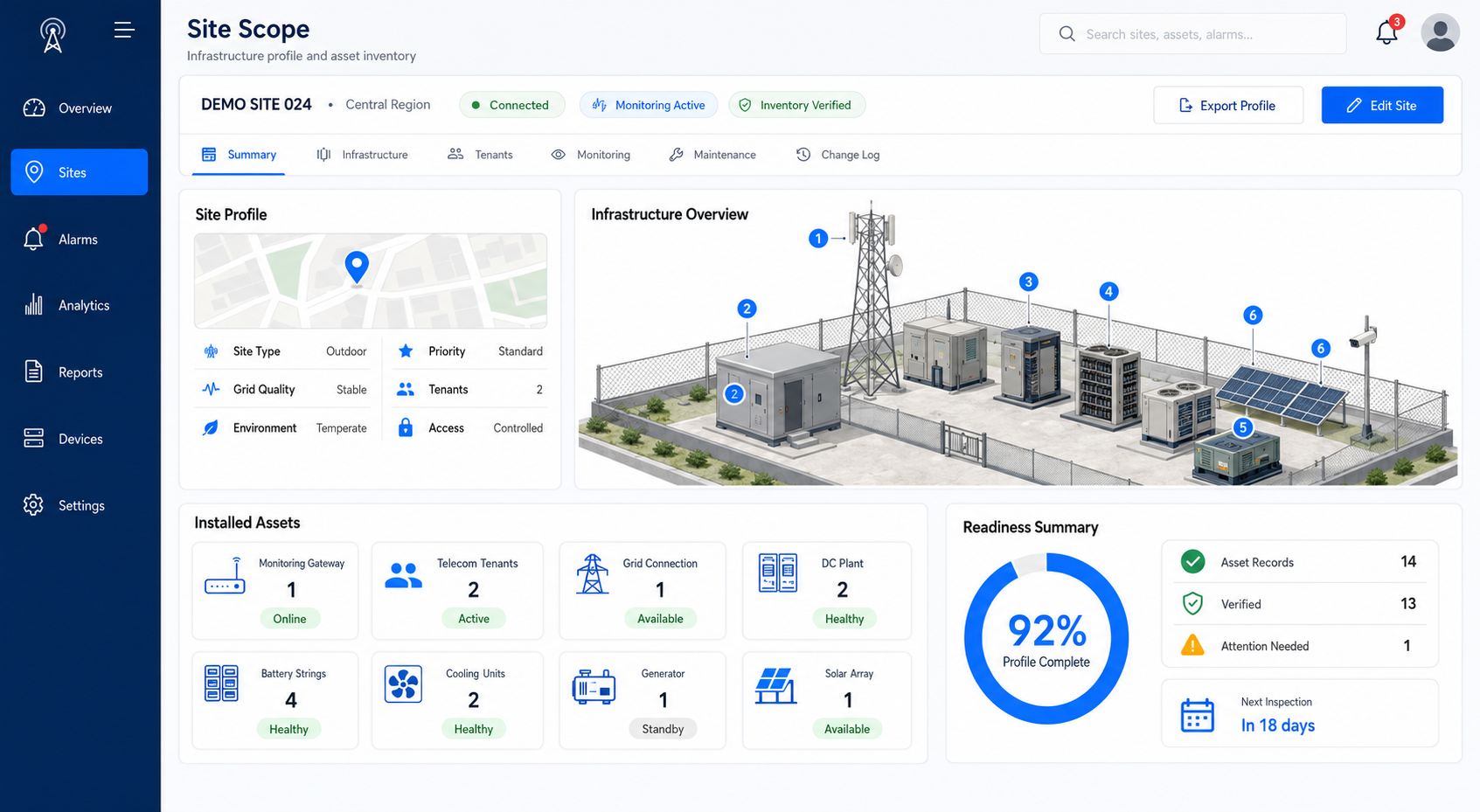
To address the needs of telecom operators, PLC Group has demonstrated its comprehensive remote monitoring and control solution which not only provides environmental temperature control, but insights, visibility, and control of all power sources on the off-grid site. Our controllers and environmental sensors integrate with all energy sources such as wind, solar, batteries and generators, allowing customers to access real-time analytics and alerts over email and SMS to take timely action.

Our system provides real-time analytics and alerts on:

  • Wind and solar energy production and trends
  • Site loads
  • Fuel status, alarms, consumption trends
  • Generator energy, run time, maintenance and fault alerts
  • Overall site temperature, alarms and alerts

We installed our universal controller, TCU NG, as well as various environmental sensors and surveillance cameras, which ultimately provide Actionable Intelligence to our customers to optimize the network in a timely fashion and reduce OPEX. Our solution allows our customers to:

  • Detect failure and allow users to reset it remotely that saves visits and down time
  • Take manual actions in case of failure to turn on/off or reset the devices
  • Reduce maintenance visits
  • Reduce environmental impact due to less generator runtime
  • Increase energy efficiency and reliance on renewable resources

Results:

Through our remote monitoring and control system, our customers were able to experience:

  • 26% fuel savings
  • 15% extra green energy produced
  • 15% overall OPEX reduced
  • Reduced carbon emissions and more 

Let’s make this difference in your mission critical facilities. Let’s talk.

#remotemonitoring #ictcooling #rewnwableenergy #reducecarbon #telecomsites #telecomshetler #telecommonitoring #datacenter #5g #telecom 

A Closer Look at Free Air Cooling (FAC) Challenges and How To Solve Them

Free Air Cooling and economization are growing in popularity. We’ve seen a growing trend among our clients that have already started or are considering using Free Air Cooling as an alternative. It is an attractive option to reduce carbon footprint and energy consumption and lower operating costs.

Problem Identified

There are many details to consider to have a smoothly running operation. We have observed several issues regarding the existing FAC units, ranging from the type of fans to the control system, how these systems are initially installed, how they interact, as well as the operations and engineering teams. This has led many organizations to rethink economization and have second thoughts about whether this could help reduce operating costs and meet their carbon reduction targets.

Many of these poorly designed systems tend to quit, especially in winter and cold environments, making the overall implementation quite unattractive. Another issue discovered was that customers spent a lot more time on filter replacements and dealt with frequent alarms.

Problem Solved

PLC has worked with multiple telecom carriers in Canada, as well as globally, and has been continuously evolving its FAC and economization techniques.

Our solution is a combination of:

  • A selection of the correct FAC units such as split Free Air Cooling or package Free Air Cooling
  • Implementing the proper control systems
  • Using artificial intelligence to analyze and predict different scenarios and make adjustments as time passes by

At the PLC group, we have conducted trials with multiple carriers over the last three to four years to identify the appropriate solution for Canada’s broad geographical span.

Seasonality is another contributor to systems performance or malfunction. For example, there is a higher risk of filter clogging near construction sites or railway tracks, resulting in a significantly reduced filter life span.

PLC Group has partnered with AIRSYS for their significant global experience in ICT cooling. One of their systems’ key advantages is the variety of free cooling systems covering a broad spectrum for different conditions and applications.

AIRSYS also offers combination units with heating and air conditioning options with high sensible cooling and inverter compressors. We work with our customers to conduct various trials and hence identified the rightsizing of the unit. The control system developed by PLC has been improved over time, providing dynamic set points with filter life prediction, filter save mode, and site-specific adjustments.

Another issue identified by the PLC Group’s analysts was that many of our customers were only focused on using the Free Air Cooling while not paying attention to the heat loss at the site. The drawback was higher energy bills in winter times due to significant heater usage.

To tackle this issue, PLC has developed various algorithms for heat re-circulation to minimize heat loss.

Even though most of these deployments are for smaller sites such as shelters, many of our customers have started using it for large cable head-ends and central offices.

Another advantage has been maximizing the use of FAC, while minimizing the need for conventional mechanical cooling that has contributed to reducing the energy and maintenance costs, as well as the impact on the environment.

We have also provided augmented control systems to our customers that seamlessly integrate with their economization and maximize the ROI.

To reach the best results, we use various techniques, including the rightsizing of the unit from AIRSYS, such as package Free Cooling or Split Free Cooling. As mentioned above, we use the PLC state-of-the-art control systems and AI techniques to maximize the filter life.

We use differential air pressure switches that provide the filter’s clogged percentage instead of the conventional non-intelligent buzzer alarm that goes off when the filter is clogged. This helps with better planning of the maintenance visits.

We also use an air filter protection device from AIRSYS to temporarily stop the Free Cooling/economization and reverts to mechanical cooling if available. This can significantly enhance the filter life by many folds. Our data analysis team continuously looks at the data and creates the algorithms to maximize benefits to the customer.

Bottomline

At least three of our large customers with thousands of telecom sites around the country have now deployed these systems. As a result, they are benefiting from energy reduction of at least 25% on average. The maintenance costs are significantly lower as our solution requires far fewer trips to replace filters and other costs associated with maintenance-related issues. Many of our customers have now taken advantage of the government-backed programs that recognize and provide financial support and rebates for reducing their carbon footprint.

Innovation keeps businesses in the game. Contact us for more information on how to streamline your business efficiently.

#freecooling #5g #hvac #airsys

5 Money Pits Costing Remote Site Operators

Telecommunication industry is a vital and essential part of personal and professional life with many mission critical components running in the background to ensure reliable connectivity and service availability.

In order to increase network availability to more customers, telecom operators have stay on top of their game operating the sites in very remote areas to keep up with demand. A critical component of these sites is power generators as a main and/or backup source of energy. As useful as these generators are, maintaining their health and efficiency can be a tall order due to extreme weather conditions in the area and the difficulty of accessing these generators manually due to their location. Some power generators demand a snowmobile, boat, or helicopter as the main vehicle of travel.

Faulty generators can be a hazard for both workers and the communities that rely on them for power. Keeping them safe and secure must always be a top priority. But the previously mentioned logistical problems can make manual maintenance a real challenge.

A case study that surveyed multiple remote installations found that the most common costly issues and problems that persist at such sites due to these circumstances are:

  • Lack of visibility regarding the fuel level of the generator

This could be the cause for many unwanted and unnecessary cost burden such as multiple site visits and frequent service calls.

  • Lack of visibility regarding the fuel leakage

Fuel leakage in the generator could only be detected physically, which could lead to running out of fuel unexpectedly, as well as harming the local environment.

  • Lack of clarity on the generator’s fuel consumption

Another fuel related costly issue that could lead into many problems such as power generator’s inefficient performance, added fuel cost, environmental impact, unnecessary added preemptive service calls, and even generator failure.

  • No real-time visibility of generator battery life

This won’t allow the operators to detect generator battery failures as soon as they occur resulting in operational interruptions and backlogs

  • Inefficient block heater runtimes that go under the radar for longer than they should

The common quick fix for such issue is to run generator block heaters longer than expected, just to be on the safe side. This will results in faster depreciation and life expectancy of the unit, as well as additional operational cost and higher environmental impact, all of which could be prevented.

The Cutting-Edge Alternative 

The best way to handle these situations is to employ PLC’s AI-based real-time Remote Monitoring and Control(RMC). Our technologies allow you to retain full control and oversight over your operations without having to expend so much energy and money to do so in person. Generator monitoring gives you access to energy utilization and consumption data that gives customers a better gauge of the cost-effectiveness of their sites. This data is transmitted in real time thanks to an electronic meter reading system, and it’s made visible through our client access portal.

Our generator monitoring solutions are viable on both intelligent and legacy generators. These tools help add better context to capacity planning based on generator load. They also allow for generators to be tested remotely, making it easier to schedule maintenance alerts.

The effects of generator monitoring are felt soon after implementation. Once the solutions are full entrenched in your ecosystem, operational inefficiencies will be identified much quicker than they would be otherwise. Identifying these problems earlier can save a significant amount of money for the customer and allow for a deeper level of control over the inner workings of each remote site.

Bottomline

RMC is quicker, less costly, and more accurate than manual tracking. PLC has delivered high quality solutions to over 10,000 sites around the world. The company was borne out of a desire to provide Telecom companies, data centres and other focus industries with better support and tools to make their systems more reliable, and our commitment to that goal has not wavered in the years since.

PLC Group’s RMC solutions are applicable to the following industries:

  • Telecom
  • Data Centers
  • Tower Companies
  • Critical Facilities
  • Oil and Gas companies

Innovation keeps businesses in the game. Contact us for more information on how to streamline your business efficiently.

#freecooling #5g #hvac #airsys

Cost Reduction and Increased Efficiency by Generator Remote Monitoring and Control Solutions

More Savings and Control with Remote Monitoring and Management

As of this writing in the tail end of 2020, businesses have a tough row to hoe. Remote Monitoring and Control (RMC) solution can provide the visibility and control of your facilities elements thus allowing businesses to optimize their operating expenses (OPEX). Make sure your business survives the coming years by trimming the operational inefficiencies now.

Case Study in Inefficiency Canada and other Northern tier regions are subjected to extreme weather. Generators at telecom sites rely on block heaters to keep them functioning optimally in this extreme climate. Block heater and generator set installations must be able to withstand fluctuating environmental conditions. This particular customer’s installations were at multiple locations, some of which were quite remote. A set run schedule was requiring block heaters in all locations to run for the same duration, at the same intervals, with fixed temperature settings. The current system could only be adjusted manually. Once AI based Remote Monitoring and Control solution was deployed, the scheduling could be easily optimized for each site.

Problem Identified

The problem faced by this specific customer was due to the non-optimal Generator block heaters run. Since the block heaters were running longer than they needed, creating high energy usage, and wasting a lot of power. This was costing the company money, both in energy cost, in the longevity of the block heaters, and in man-hours for scheduled site-specific maintenance.

Lingering Issues:

  • High Energy Bills
  • High Maintenance Cost
  • High Carbon Footprint

Running the block heaters inefficiently resulted in over $1100 in energy consumption per site every year. If the company wanted to change up the schedule of the block heaters at individual sites, they had to send someone out there to do it. This resulted in regular site visits, costing the company additional funds in labor and transportation expenses. Any changes needed to coincide with the site visits. Special site visits to remote areas resulted in additional labor costs and a larger carbon footprint for the company.

Problem Solved

Upon deploying a comprehensive AI based Remote Monitoring & Control solution, the operational inefficiencies were identified. With RMC solution in place, two important things helped reduce the energy consumption

  • Ongoing energy monitoring
  • The ability to remotely monitoring and control the Generator Block Heater test/run schedules

Power usage was reduced, saving the customer over $500K per year in energy cost alone. The customer had 800 sites affected by the same inflexible run schedule. Implementing Remote Monitoring and Control solution gave the company much needed flexibility in regard to their block heater deployment. They were able to have more control over the energy usage costs at each site. Energy Monitoring Equipment generated data that helped the company visualize energy consumption site by site and reduce it in total by over 55%.

  • $500K of savings per year in energy cost alone.
  • Over 55% reduction in annual energy consumption
  • Lower Carbon foot print

Once the RME (Remote Monitoring Equipment) was in place, changes could be made without requiring site specific trips by technicians. Labor costs were reduced, as well as the company’s carbon footprint. With this Generator Monitoring and Control system, it was possible to remotely manage the block heater run schedule and adjust it to suit fluctuating weather conditions. Bringing smart solutions to business problems is especially necessary as businesses face increasing competition. Every dollar saved through efficiency can be reinvested back into your business.

Innovation keeps businesses in the game. Contact us for more information on how to efficiently streamline your business.

Latest blog

Discover expert advice and
solutions news

Collaboration Form

Connect with Our Experts


For Sales and Partnership:


+ 1 855 PLCGRUP (752 4787) Press 3