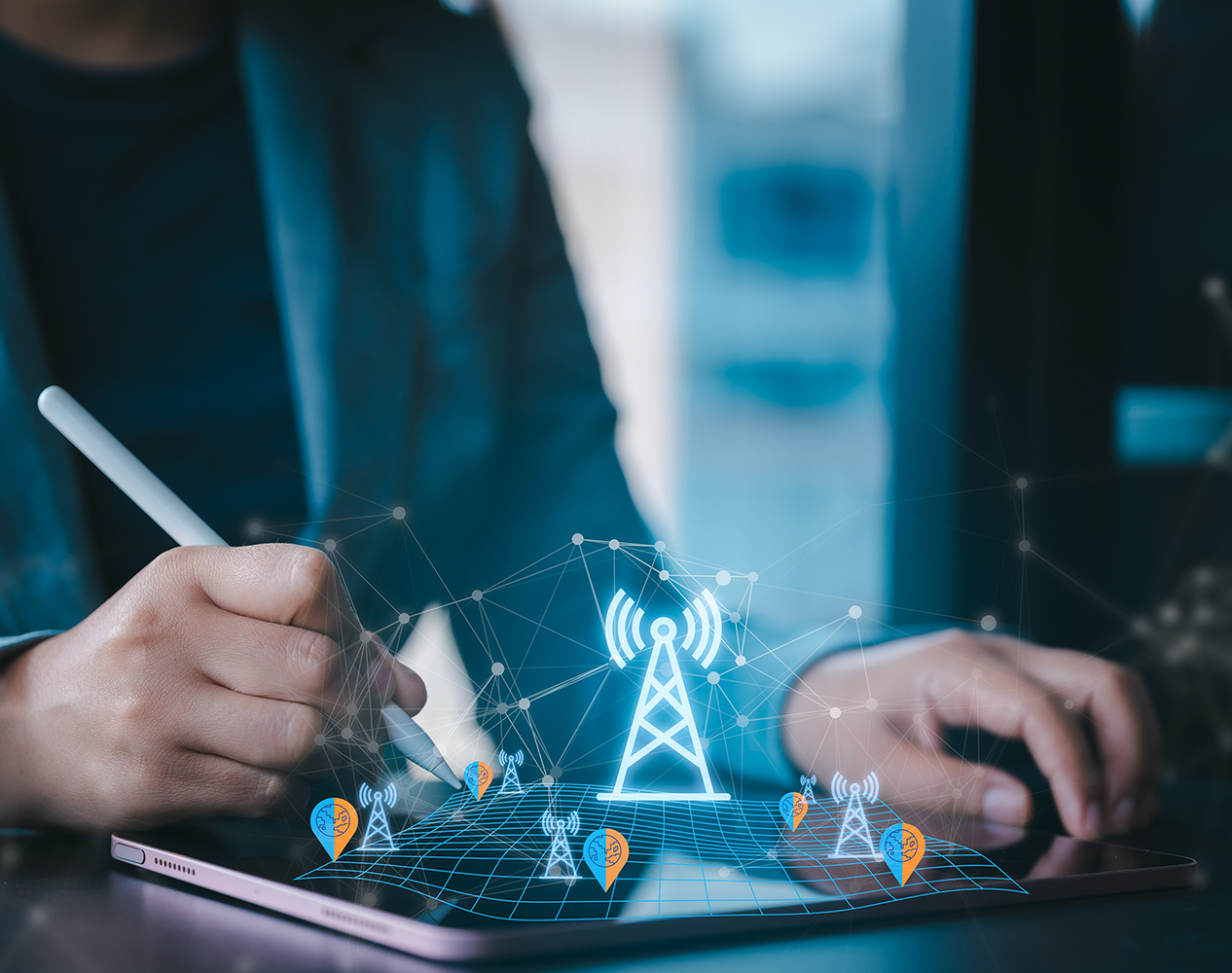
Cooling as a Service (CaaS) for Data Centres and Telecom Companies

Telecommunications networks and data centres operate 24/7 to assure reliable and secure transfer of information which requires a huge amount of energy, that gets wasted in the form of heat rather than being used for data transfer. Further, maintenance of optimal temperature is critical for ensuring maximum device efficiency. Due to these factors, Heating, Ventilation and Air Conditioning (HVAC) systems form an integral part of data centres and telecom companies.

HVAC systems also require energy which may increase the carbon footprint considerably. Also, conventional HVAC units require regular maintenance for satisfactory working. This accounts for significant financial expenditure. However, recent developments in the technological field can help in reducing CAPEX and OPEX, while minimizing the emission of harmful gases.

PLC’s Cooling as a Service (CaaS)

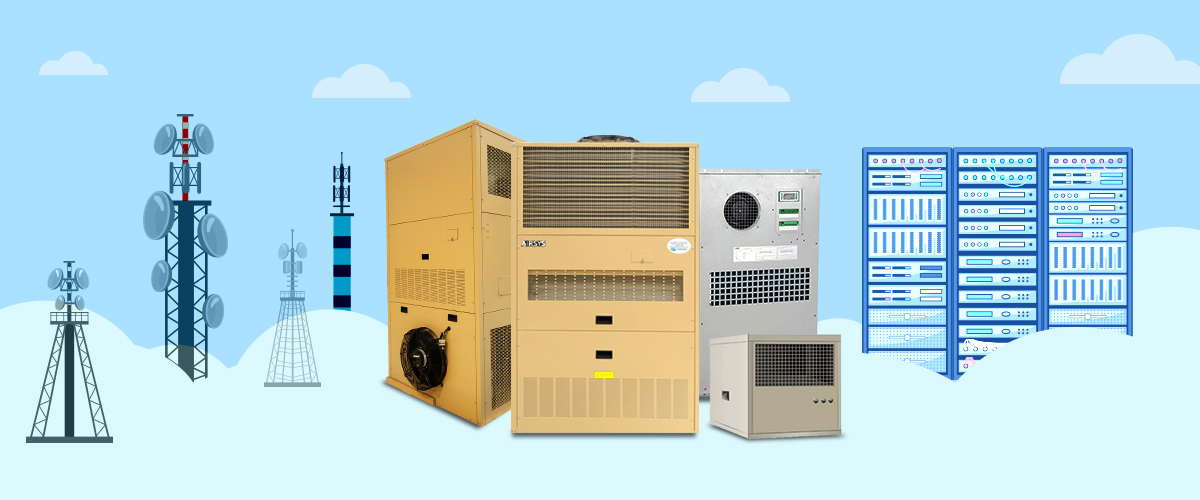
PLC, in conjunction with AIRSYS, offers a wide range of information and communication technology cooling systems. This includes wall-mounted HVACs, free air-cooling units, cabinet cooling units, and computer room air conditioners. These units are innovatively designed to operate at maximum efficiency with minimal power consumption.

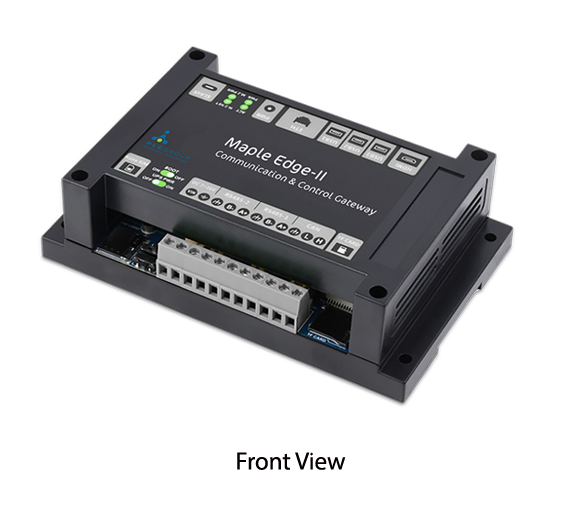
PLC’s CaaS model is flexible, highly adaptable, and can be scaled to best suit the requirement. It facilitates the upgrade of existing cooling systems with zero capital investment. CaaS model integrates many agile technologies like IoT, AI, ML, and Data Analytics to render state-of-art performance. It employs smart sensors at various nodes to collect precise operational parameters like IT loading, cooling consumption, and others. This vast real-time information can then be rigorously analyzed to define data patterns.

How is it Beneficial?

PLC’s Actionable Intelligence provides real-time analysis and predictive maintenance in the form of quick corrective actions. Increased visibility supplemented with artificial intelligence help in achieving these goals automatically, with minimal or no human intervention.

Through CaaS, telecom industries and data centres can minimize their energy requirements by driving their equipment at maximum efficiency. Such an optimized network enhances customer satisfaction by offering long-term reliability with minimal downtimes. CaaS also offers financial benefits for service providers like increased Return-on-Investment (ROI) and reduced capital/operational expenditure. Further, CaaS offers the flexibility to pay only for the IT load cooling consumption, a feature that is irrelevant in the conventional mode of operation. Additionally, through CaaS, the service providers get rewarded with a cashback for their existing cooling systems.

The CaaS model allows service providers to reach their goals in reducing their carbon emissions. This helps the telecom and data centres to be compliant with government laws, avoiding high penalties. Furthermore, it increases their reputation as they will be fulfilling their social responsibility of being environment friendly.

A leading telecom operator that deployed PLC’s CaaS model experienced a reduction of 35% in their operational cost. They not only received $60K cashback for their existing cooling assets but is also predicted to experience total savings of $1.1 million over 10 years with zero additional capital expenditure.

Conclusion

Reduction of total cost of ownership in telecom and data centre facilities can be effectively met by implementing the CaaS model. Enhanced visibility, real-time monitoring, predictive maintenance, and other features of this innovative service prove to be beneficial with respect to both financial as well as performance aspects.

A Closer Look at Free Air Cooling (FAC) Challenges and How To Solve Them

Free Air Cooling and economization are growing in popularity. We’ve seen a growing trend among our clients that have already started or are considering using Free Air Cooling as an alternative. It is an attractive option to reduce carbon footprint and energy consumption and lower operating costs.

Problem Identified

There are many details to consider to have a smoothly running operation. We have observed several issues regarding the existing FAC units, ranging from the type of fans to the control system, how these systems are initially installed, how they interact, as well as the operations and engineering teams. This has led many organizations to rethink economization and have second thoughts about whether this could help reduce operating costs and meet their carbon reduction targets.

Many of these poorly designed systems tend to quit, especially in winter and cold environments, making the overall implementation quite unattractive. Another issue discovered was that customers spent a lot more time on filter replacements and dealt with frequent alarms.

Problem Solved

PLC has worked with multiple telecom carriers in Canada, as well as globally, and has been continuously evolving its FAC and economization techniques.

Our solution is a combination of:

  • A selection of the correct FAC units such as split Free Air Cooling or package Free Air Cooling
  • Implementing the proper control systems
  • Using artificial intelligence to analyze and predict different scenarios and make adjustments as time passes by

At the PLC group, we have conducted trials with multiple carriers over the last three to four years to identify the appropriate solution for Canada’s broad geographical span.

Seasonality is another contributor to systems performance or malfunction. For example, there is a higher risk of filter clogging near construction sites or railway tracks, resulting in a significantly reduced filter life span.

PLC Group has partnered with AIRSYS for their significant global experience in ICT cooling. One of their systems’ key advantages is the variety of free cooling systems covering a broad spectrum for different conditions and applications.

AIRSYS also offers combination units with heating and air conditioning options with high sensible cooling and inverter compressors. We work with our customers to conduct various trials and hence identified the rightsizing of the unit. The control system developed by PLC has been improved over time, providing dynamic set points with filter life prediction, filter save mode, and site-specific adjustments.

Another issue identified by the PLC Group’s analysts was that many of our customers were only focused on using the Free Air Cooling while not paying attention to the heat loss at the site. The drawback was higher energy bills in winter times due to significant heater usage.

To tackle this issue, PLC has developed various algorithms for heat re-circulation to minimize heat loss.

Even though most of these deployments are for smaller sites such as shelters, many of our customers have started using it for large cable head-ends and central offices.

Another advantage has been maximizing the use of FAC, while minimizing the need for conventional mechanical cooling that has contributed to reducing the energy and maintenance costs, as well as the impact on the environment.

We have also provided augmented control systems to our customers that seamlessly integrate with their economization and maximize the ROI.

To reach the best results, we use various techniques, including the rightsizing of the unit from AIRSYS, such as package Free Cooling or Split Free Cooling. As mentioned above, we use the PLC state-of-the-art control systems and AI techniques to maximize the filter life.

We use differential air pressure switches that provide the filter’s clogged percentage instead of the conventional non-intelligent buzzer alarm that goes off when the filter is clogged. This helps with better planning of the maintenance visits.

We also use an air filter protection device from AIRSYS to temporarily stop the Free Cooling/economization and reverts to mechanical cooling if available. This can significantly enhance the filter life by many folds. Our data analysis team continuously looks at the data and creates the algorithms to maximize benefits to the customer.

Bottomline

At least three of our large customers with thousands of telecom sites around the country have now deployed these systems. As a result, they are benefiting from energy reduction of at least 25% on average. The maintenance costs are significantly lower as our solution requires far fewer trips to replace filters and other costs associated with maintenance-related issues. Many of our customers have now taken advantage of the government-backed programs that recognize and provide financial support and rebates for reducing their carbon footprint.

Innovation keeps businesses in the game. Contact us for more information on how to streamline your business efficiently.

#freecooling #5g #hvac #airsys

Cooling Strategies for 5G Growth

Eliminate capital expenditure (CAPEX) and provide data driven predictions that optimize cooling assets while lowering the energy and operational costs (OPEX)

5G is already revolutionizing the human experience and raising expectations on availability, speed, and reliability. This is posing a challenge for the Telcos, service providers, and their entire ecosystem. Service providers must scale their facilities for the present and future, with limited CAPEX, environmental considerations and keeping the OPEX lowered.

In this webinar, we explore how some of the industry leaders are already dealing with these challenges and shed light on innovative concepts such as Cooling as a Service. This focuses on eliminating the CAPEX, providing data driven predictions, and optimizing cooling assets while lowering the energy and operational costs (OPEX).

Find answers to the following questions:

  • How will 5G impact the Telecom infrastructure?
  • What are the techniques already tried and tested for scalability and lowered CAPEX and OPEX?
  • How are Telcos preparing to deal with environmental challenges while the demand for cooling is increasing?
  • What is a better financial model?
  • What is Cooling as a Service?
  • What is data-driven Actionable Intelligence from PLC Group and how can this benefit cooling for 5G?

Learn more about our Cooling solutions for Telecom and Data Centres.

Click here to know more about our Cooling Monitoring and Optimization solution.

Innovation keeps businesses in the game. Contact us for more information on how to efficiently streamline your business.

Latest blog

Discover expert advice and
solutions news

Collaboration Form

Connect with Our Experts


For Sales and Partnership:


+ 1 855 PLCGRUP (752 4787) Press 3