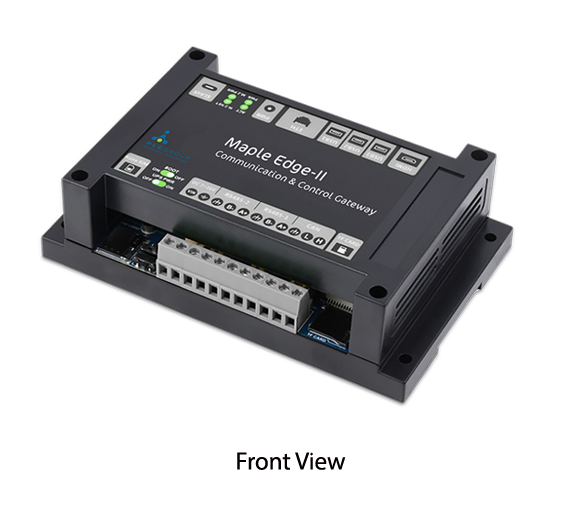
An industrial IoT gateway serves as the communication backbone of modern remote monitoring systems. It connects field devices, sensors, meters, and controllers to centralized platforms for real-time analysis. In mission-critical facilities, reliable connectivity is not optional. It directly impacts uptime, safety, and performance.
PLC Group integrates Industrial IoT Gateway solutions into its Remote Monitoring & Control ecosystem. Established in 2014 and headquartered in Mississauga, Ontario, PLC Group delivers advanced monitoring and automation for telecom, data centers, utilities, renewable energy sites, and public safety networks across North America.
By aggregating operational data from multiple assets, an IoT gateway transforms raw signals into structured intelligence. This enables predictive maintenance, energy optimization, and reduced downtime across distributed infrastructure.
What does an Industrial IoT Gateway do in remote monitoring?
An Industrial IoT Gateway connects field devices to centralized platforms for real-time monitoring and control. It enables secure data transmission, protocol conversion, and edge processing for mission-critical infrastructure.
Why are Communication Gateways important for critical facilities?
Communication Gateways ensure uninterrupted data flow between equipment and analytics systems. They reduce downtime, improve energy efficiency, and support predictive maintenance strategies.
Why Are IoT Gateways Critical For Remote Monitoring & Control?
Remote Monitoring & Control systems depend on continuous, secure communication. Without robust communication gateways, data silos and latency issues can disrupt operations.
An Industrial IoT Gateway enables:
- Secure protocol conversion between Modbus, SNMP, BACnet, and MQTT
- Real-time data transmission from remote sites to centralized dashboards
- Edge processing to reduce bandwidth and latency
- Automated alarm triggers and policy-based control logic
These capabilities allow operators to monitor assets across hundreds of distributed sites. PLC Group’s RMC solutions combine hardware and AI-driven analytics through the AxIn platform. This converts operational data into measurable financial value.
For critical facilities, even minor communication gaps can lead to SLA breaches or revenue loss. Communication Gateways eliminate these risks by ensuring stable data flow and system interoperability.
How Does An Industrial IoT Gateway Improve Energy Efficiency And Reliability?
Energy efficiency and uptime are central to infrastructure performance. An Industrial IoT Gateway provides visibility into energy consumption, cooling systems, and power assets. It enables facility managers to detect anomalies before they escalate.
PLC Group’s IoT gateway solutions support:
- Real-time energy monitoring
- Intelligent load balancing
- Adaptive cooling controls
- Predictive outage detection
- Automated fault isolation
By integrating with AI and machine learning, gateways help identify underperforming sites. Operators can then adjust setpoints, prevent equipment stress, and extend asset life. This approach reduces operational costs and protects return on investment.
What Industries Benefit Most From Industrial IoT Gateway Deployment?
Critical infrastructure sectors rely heavily on reliable Communication Gateways. PLC Group supports industries where downtime is costly and reliability is mandatory.
Telecommunications providers use IoT gateway systems to monitor remote towers and base stations. Data centers rely on them to track cooling performance and power usage effectiveness. Utilities and renewable energy facilities use gateways to manage distributed energy assets. Cable landing stations and public safety networks depend on uninterrupted monitoring for secure operations.
Across these sectors, scalability matters. PLC Group delivers flexible as-a-Service models, including Actionable Intelligence, RMS, and Cooling as a Service. These models provide predictable operational costs while maintaining enterprise-grade performance.
How Does PLC Group Strengthen Remote Monitoring With IoT Gateways?
PLC Group combines Industrial IoT Gateway hardware with advanced analytics through the AxIn platform. This platform leverages AI and machine learning to convert site data into actionable insights.
Integrated remote monitoring systems unify connectivity, analytics, and automation. Gateways securely transmit data into centralized dashboards, enabling rapid root cause analysis and intelligent alarm management. Operators gain full visibility into site health, energy use, and asset performance.
This integrated approach improves facility performance and reduces unplanned outages. It also supports long-term scalability as infrastructure expands.
Why Should Infrastructure Leaders Invest In Advanced IoT Gateways?
Infrastructure leaders face increasing pressure to reduce costs while improving reliability. An Industrial IoT Gateway delivers measurable operational benefits by ensuring continuous communication between assets and analytics platforms.
Organizations gain greater visibility, faster response times, and stronger energy management. When combined with AI-powered monitoring, gateways become a strategic investment rather than a simple connectivity device.
PLC Group provides scalable Industrial IoT Gateway solutions designed for mission-critical environments across North America. Contact PLC Group to learn how advanced IoT gateway technology can strengthen Remote Monitoring & Control and improve infrastructure performance.