Hybrid workforces now operate across offices, data centers, remote sites, and unmanned facilities. Productivity depends on visibility, responsiveness, and control across these distributed environments. Remote monitoring tools play a critical role in bridging physical infrastructure and digital operations, especially for organizations managing critical assets.
For industries that rely on uptime, energy efficiency, and operational continuity, remote monitoring is no longer optional. It has become a foundational capability for sustaining productivity in hybrid operational models.
What Challenges Do Hybrid Workforces Face in Managing Physical Infrastructure?
Hybrid workforces often lack direct, on-site access to critical systems. This creates delays, inefficiencies, and increased risk.
Teams struggle with limited real-time visibility into equipment health. Issues often surface only after performance drops or failures occur. Manual site visits consume time and resources. Response times stretch across hours or days.
Operational data remains siloed across systems. Decision-making becomes reactive rather than proactive. Productivity suffers when teams cannot act quickly or confidently.
Remote operations demand tools that provide clarity without physical presence. This is where industrial-grade monitoring changes outcomes.
How Do Remote Monitoring Tools Enable Consistent Productivity Across Locations?
Remote Monitoring Tools centralize operational data from distributed assets. Teams gain a unified view of performance, energy usage, and system health.
Real-time dashboards replace manual checks. Alerts highlight issues before they escalate. Teams act based on live data, not assumptions.
Hybrid teams collaborate more effectively when everyone sees the same information. Engineers, operators, and managers align faster. Workflows become predictable and repeatable.
By removing dependence on location, remote monitoring supports productivity regardless of where teams operate.
Why Are Industrial Remote Monitoring Devices Critical for Hybrid Operations?
Hybrid productivity depends on reliable data collection at the edge. Industrial remote monitoring devices capture operational signals directly from equipment and infrastructure.
These devices monitor power systems, HVAC units, generators, sensors, and environmental conditions. They support both intelligent and non-intelligent assets.
Field-level data is collected continuously. Information flows securely to centralized platforms. This ensures decisions reflect actual site conditions.
Without robust hardware at the edge, software insights lose accuracy. Productivity relies on dependable data sources.
How Does a PLC Monitoring System Improve Team Efficiency?
A PLC Monitoring System connects operational logic with real-time visibility. Programmable logic controllers manage sequences, thresholds, and automated responses.
Teams no longer rely on manual intervention for routine tasks. Control actions execute automatically based on predefined rules.
Engineers focus on optimization instead of firefighting. Operators spend less time diagnosing issues. Management gains confidence in performance metrics.
Automation reduces errors. Consistency improves output. Hybrid teams operate with fewer disruptions.
What Role Does Remote Monitoring Control Play in Hybrid Productivity?
Remote monitoring control moves beyond observation. It enables action.
Teams can adjust setpoints, restart equipment, and optimize energy use remotely. Control functions eliminate unnecessary site visits.
This capability shortens response times. Issues are resolved before impacting operations. Productivity increases when downtime decreases.
Control also supports standardized operations. Hybrid teams follow consistent procedures across all locations. This reduces variability and improves reliability.
How Does Remote Monitoring and Control Hardware Support Automation?
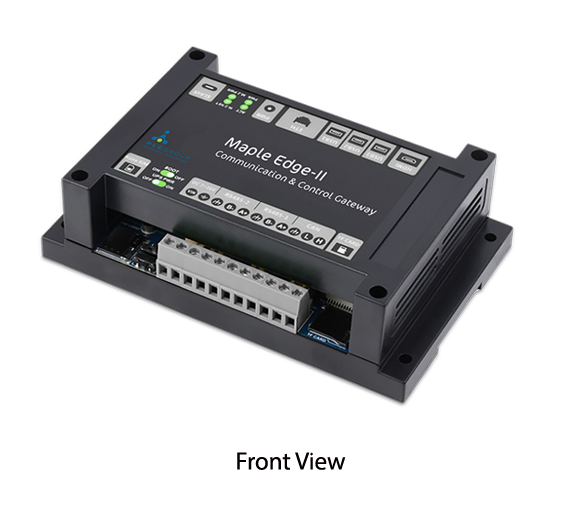
Remote monitoring and control hardware forms the backbone of industrial IoT environments. It connects assets, networks, and platforms into a cohesive system.
This hardware supports multiple protocols, including SNMP, Modbus, and IP-based communication. It integrates seamlessly with existing infrastructure.
Edge-level processing enables faster decision-making. Local logic continues functioning even during connectivity interruptions.
Automation depends on resilient hardware. Without it, hybrid operations lose stability and efficiency.
What Productivity Gains Come from Using Remote Monitoring Hardware?
Remote monitoring hardware enables measurable productivity improvements across hybrid workforces.
- Reduced downtime through early fault detection
- Faster response through real-time alerts
- Lower operational costs through optimized energy use
- Improved collaboration through shared visibility
These gains translate into consistent performance across distributed environments. Teams focus on value-driven work instead of manual oversight.
How Does Data Analytics Strengthen Hybrid Workforce Decision-Making?
Remote monitoring platforms transform raw data into actionable insights. Analytics identify trends, inefficiencies, and risks.
Teams move from reactive to predictive operations. Maintenance shifts from scheduled to condition-based. Resources are allocated more effectively.
Predictive insights support long-term planning. Asset life extends. Capital investments align with actual performance data.
Productivity improves when decisions rely on evidence, not estimates.
Why Is Predictive Maintenance Essential for Hybrid Productivity?
Predictive maintenance reduces unplanned disruptions. It identifies issues before failure occurs.
Sensors and monitoring tools track performance indicators continuously. Deviations trigger alerts and recommendations.
Hybrid teams schedule maintenance strategically. Emergency repairs decline. Operational continuity improves.
Predictive maintenance aligns perfectly with hybrid work models. Teams intervene only when needed, from anywhere.
How Do Centralized Dashboards Improve Hybrid Team Collaboration?
Centralized dashboards provide a single source of truth. Everyone sees the same metrics, alerts, and trends.
Communication improves when data is shared visually. Meetings focus on solutions instead of explanations.
Hybrid teams coordinate actions faster. Accountability increases. Productivity rises as ambiguity decreases.
Dashboards also support reporting and compliance. Performance reviews become data-driven and transparent.
How Does PLC Group Enable Remote Monitoring for Hybrid Workforces?
PLC Group delivers integrated industrial IoT and remote monitoring solutions for critical infrastructure. Established in 2014, the company focuses on converting operational data into measurable financial value.
Its ecosystem combines intelligent hardware, advanced analytics, and automation through platforms such as AxIn. These solutions support telecommunications, data centers, utilities, renewable energy sites, and public safety networks.
PLC Group enables organizations to improve productivity by delivering real-time visibility, predictive maintenance, and scalable control across hybrid operations.
What Makes PLC Group’s Approach Effective for Distributed Teams?
PLC Group solutions support flexible deployment models. Hybrid teams scale monitoring without increasing complexity.
As-a-Service options provide predictable operational costs. Automation reduces manual workload. Analytics drive continuous improvement.
Teams gain control without sacrificing flexibility. Productivity improves across technical and operational roles.
This approach aligns technology with real-world operational demands.
How Can Organizations Move Forward With Smarter Hybrid Operations?
Hybrid workforces demand more than connectivity. They require intelligence, automation, and control across physical infrastructure.
Remote monitoring solutions provide the foundation for consistent productivity. They reduce risk, improve efficiency, and support informed decision-making.
Organizations that invest in industrial-grade monitoring gain a competitive advantage. Operations become resilient, scalable, and data-driven.
To enable smarter hybrid operations, connect with PLC Group and explore how advanced remote monitoring solutions can transform productivity across critical infrastructure.