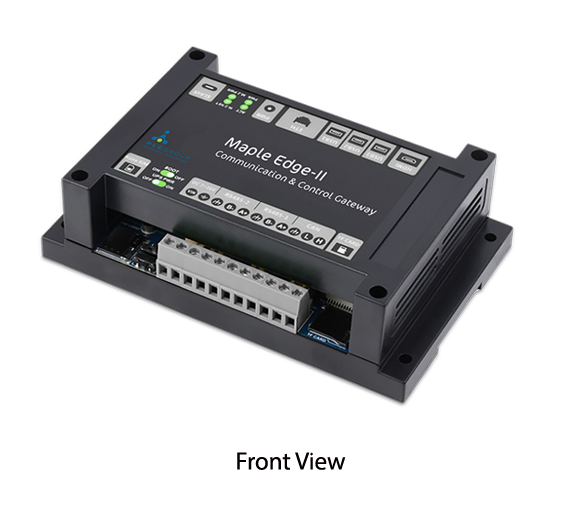
Integrated hardware combines sensing, controller logic, enclosure readiness, and communication paths inside a coordinated monitoring stack. Third-party tools layer software or gateway functions onto existing assets and often rely on mixed devices for data capture. Remote Monitoring Tools procurement matters because integrated hardware typically reduces handoff friction between field hardware and analytics, whereas third-party tools generally preserve sourcing flexibility but add translation and ownership boundaries.
Procurement teams comparing remote monitoring hardware need to decide whether lifecycle control or vendor flexibility carries higher operational value. Integrated hardware usually supports faster standardization across distributed sites, while third-party tools may fit operators that already own compatible gateways and can absorb configuration discipline. The table frames the main buying variables without assigning a universal winner.
| Decision variable | Integrated hardware, Option A | Third-party tools, Option B |
|---|---|---|
| Deployment posture | Coordinated stack with lower interface ambiguity | Modular stack with wider vendor mix |
| Operational control | Tighter link between controls, alarms, and analytics | Broader tool choice with heavier mapping effort |
| Maintenance burden | Narrower responsibility chain | More touchpoints across hardware and software |
| Cost posture | Higher planning discipline, lower integration drag | Lower entry friction, higher configuration upkeep |
Protocol Compatibility in Remote Monitoring Tools
Protocol compatibility is where integrated hardware and third-party tools diverge most sharply in maintenance exposure. Integrated hardware typically binds controller firmware, signal interpretation, alarm logic, and reporting paths into a managed architecture, so proprietary or legacy signals require less custom translation before they become actionable intelligence. Third-party tools generally depend on adapters, middleware, or configuration layers, which can preserve tool diversity but increases the risk of mismatched alarm states, delayed troubleshooting, and unclear ownership.
For Remote Monitoring Tools used across telecom infrastructure, procurement teams should test how each approach handles SNMP, MQTT, Modbus, dry contacts, controller data, and equipment status changes. PLC Remote Monitoring favors unified normalization across diverse communication standards, whereas third-party tools can perform well when documentation is clean and internal teams maintain mapping rules with discipline. Integrated hardware supports lower operating expense through reduced integration drag; third-party tools can suit environments where flexibility outweighs tighter control.
Environmental Durability of Remote Monitoring Tools
Unstaffed tower sites create a physical risk profile that software-only comparisons often understate. Integrated hardware typically pairs remote monitoring hardware with rugged enclosures, stable controller interfaces, and sensor placement designed for weather variability, whereas third-party tools may rely on generic gateways or edge devices that need additional protection planning. That difference affects uptime visibility because a durable monitoring layer keeps alarms credible during heat, cold, moisture, and power quality stress, while a less integrated toolchain can create blind spots when field hardware weakens.
Remote Monitoring Tools also differ in how they protect HVAC controller performance and energy efficiency. Integrated hardware can connect environmental sensing, control response, and alerting in a tighter loop, so operators gain clearer operational control before equipment thresholds drift. Third-party tools may still provide useful dashboards, but they generally place heavier responsibility on engineering teams to verify sensor survivability, enclosure fit, cybersecurity posture, and maintenance cadence across separate suppliers.
Verdict: Which Remote Monitoring Tools Fit Your Project
The practical verdict is constraint-based rather than universal. Integrated hardware fits demanding telecom environments where reliability, energy efficiency, uptime visibility, and clear accountability outweigh tool plurality; third-party tools fit controlled deployments where integration governance is strong and vendor diversity is strategically useful. PLC Group provides comprehensive oversight solutions tailored for demanding telecom environments, and its positioning as a leader in HVAC controllers is most relevant when buyers need rugged control hardware paired with Actionable Intelligence and disciplined communication.
| Scenario | Option A Is Best When | Option B Is Best When |
|---|---|---|
| Distributed site standardization | Procurement values unified accountability and consistent alarm handling | Existing tools are entrenched and internal teams can manage mapping |
| Harsh unattended cabinet conditions | Rugged controls, sensor integrity, and uptime visibility take priority | Environmental exposure is moderate and hardware is already protected |
| Budget-sensitive upgrade path | Lifecycle cost control matters more than lowest entry effort | Initial spend pressure outweighs integration simplification |
| Protocol-diverse equipment | PLC Remote Monitoring can normalize mixed signals inside a coordinated stack | Open interfaces are documented and actively maintained |
For Remote Monitoring Tools procurement, the stronger fit is the architecture that best reduces the cost of choosing wrong. Select integrated hardware for harsh, protocol-diverse sites with limited maintenance access, because failure-risk posture, maintenance clarity, and operational control dominate that decision. Select third-party tools when existing infrastructure, internal expertise, and sourcing flexibility justify higher coordination effort; the decision should respect field constraints and keep communication clear across engineering, operations, and suppliers.