Facility managers overseeing telecom sites, data centers, or multi-site infrastructure face a common problem: assets are spread out, and staff can’t be everywhere at once. That gap between what’s happening on site and what the team actually knows about it is where most costly failures start.
Industrial IoT monitoring closes that gap. It connects sensors, gateways, and controllers to a central platform so facility managers can see power loads, cooling performance, alarms, and access events in real time, no matter where the site sits. Rather than waiting on a scheduled walkthrough or a call from an on-site technician, a facility manager working from a single dashboard can spot a problem the moment it starts to develop.
This shift matters more as portfolios grow. A team managing three sites can get by with spreadsheets and phone calls, but a team managing thirty sites across several regions cannot. Below are seven benefits of industrial IoT monitoring that make the case for bringing remote visibility into daily facility operations.
For a full breakdown of the platforms, protocols, and service models behind this shift, see Industrial IoT Monitoring Solutions for Critical Facility Operations.
1. Fewer Unplanned Outages
Continuous monitoring flags abnormal readings, whether that’s a temperature spike in a cabinet or a power fluctuation at a remote tower, well before those conditions turn into a full outage. Facility teams get an alert and a window to act instead of a service call after equipment has already failed. For sites where downtime affects customers or safety systems, that early warning is often the difference between a quiet fix and a major incident report.
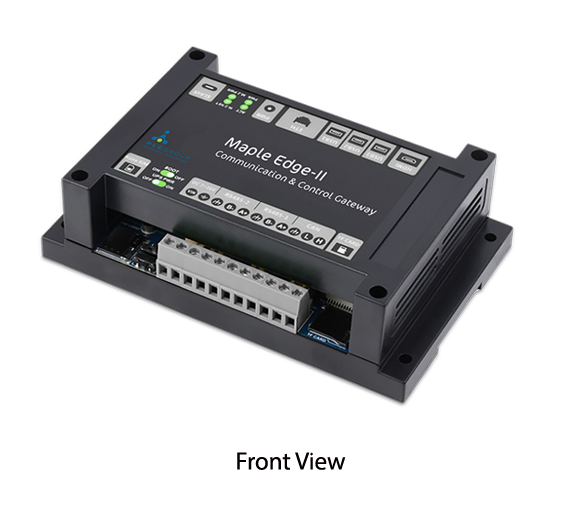
Ruggedized field devices built for harsh industrial conditions keep fault surveillance running even in extreme temperatures or exposed outdoor cabinets.
See Why Industrial Facilities Are Moving to Remote Monitoring Solutions for the industry trends driving this shift.
2. Lower Maintenance Costs
Predictive diagnostics built into industrial IoT monitoring platforms track equipment behavior over time and flag wear patterns early. That shifts maintenance from a reactive, break-fix model to a scheduled one, which cuts emergency repair costs and extends the life of cooling systems, generators, and other critical assets.
A scheduled maintenance model also changes how a facility manager staffs and budgets for repairs, letting teams plan visits around actual equipment condition rather than holding technicians on standby for emergencies that may or may not happen.
3. Reduced Energy Spend
One of the most measurable benefits of industrial IoT monitoring is energy optimization. Analytics layered on top of live power and cooling data identify where a site is running hotter or drawing more load than it needs to, so facility managers can adjust settings and cut waste without guesswork.
Cooling accounts for a large share of operating cost at telecom shelters and data centers, and small inefficiencies compound across dozens of sites. A platform that tracks energy use continuously turns that inefficiency into a line item facility managers can actually see and correct.
4. Less Time Spent on Site Visits
IoT monitoring for facility management replaces a lot of routine, manual inspection. When dashboards already show environmental conditions, alarm status, and equipment health, technicians only need to travel when a real issue requires hands on site.
Facility teams looking to cut manual site visits and centralize alerts can request a consultation with PLC Group.
5. Stronger Compliance and Reporting
Centralized data makes regulatory and safety reporting far less painful. Instead of pulling logs from separate systems at separate sites, facility managers can generate consistent records from one platform, which supports audits and internal reviews without last-minute scrambling.
Role-based access and secure remote configuration also give facility managers control over who can view or change settings at any given site, so compliance records reflect exactly who did what and when.
6. Remote Monitoring Benefits Across Distributed Sites
For organizations managing telecom towers, cable landing stations, or data centers spread across regions, remote monitoring benefits industrial operations by putting all locations on one screen. Multi-protocol support for standards like Modbus, BACnet, SNMP, MQTT, and OPC UA means new equipment and legacy controllers can connect to the same platform, so growth doesn’t mean starting over with a new system.
Dual-path connectivity and local data buffering keep this visibility intact even when a site loses its primary connection, storing readings locally until the link comes back.
See Industrial IoT Monitoring Solutions vs Traditional SCADA Systems for how this compares to legacy control systems.
7. Better, Faster Decisions
AI-driven platforms such as PLC Group’s AxIn turn raw sensor data into forecasts facility managers can actually use for planning. Organizations using this kind of analytics report up to 90 percent accuracy in planning and forecasting, along with a 10 to 15 percent reduction in total cost of ownership across their facilities.
That combination of speed and accuracy changes what a facility manager can commit to during budget season, since forecasts grounded in real operating data hold up better under scrutiny than estimates built on historical averages or gut feel.
Bringing It Together
The benefits of industrial IoT monitoring come down to one shift: facility managers stop reacting to problems and start anticipating them. Less downtime, lower maintenance spend, tighter energy use, and centralized compliance data all trace back to the same source, which is continuous visibility into assets that used to be a black box between site visits.
None of this requires ripping out existing infrastructure. Industrial IoT monitoring platforms are built to integrate with legacy controllers over open protocols, so most facility teams can add this layer of visibility to what they already have.
PLC Group builds industrial IoT and remote monitoring systems for telecom, data center, and facilities teams that need that visibility without adding headcount. Explore the full platform at PLC Group and connect with the team to see what a monitored, ruggedized deployment looks like for your sites.