
What Can a Remote Monitoring System Do for Your Critical Infrastructure?
As industrial operations grow more distributed and uptime requirements become more demanding, remote monitoring has shifted from a convenience to a critical infrastructure necessity.
This guide draws on insights across industrial IoT deployments in telecommunications, data centers, utilities, and facilities management to cover what a remote monitoring system is, how it works, where it delivers ROI, and what it costs organizations that operate without one.
The main takeaway: A remote monitoring system does not just provide visibility — it replaces your team’s dependency on reactive site visits and manual inspections with continuous, AI-driven intelligence. Organizations that deploy industrial IoT solutions eliminate the five most expensive operational cost drains in remote facility management: generator downtime, fuel theft, HVAC inefficiency, reactive maintenance, and excessive field dispatch. For critical infrastructure operators, this translates to a 10 to 15 percent reduction in total facility cost of ownership and ROI achieved in fewer than 18 months.
Operating a network of distributed critical facilities without real-time visibility is like flying an aircraft through total fog with no instruments. You cannot see where you are, where you are heading, or what hazards lie ahead. You are making consequential decisions in the dark. This is the operational reality facing organizations that manage telecom towers, data centers, utility sites, and remote facilities without a remote monitoring system. And the costs, measured in unplanned downtime, energy waste, emergency repairs, and missed maintenance windows, compound quietly until they become impossible to ignore.
A remote monitoring system changes that equation entirely. It replaces reactive, manual operations with continuous, data-driven visibility. It converts raw operational data into actionable intelligence. And for organizations managing mission-critical infrastructure at scale, it has become the single most important tool for controlling costs and protecting uptime.
This guide covers everything operations teams and facility managers need to understand about industrial remote monitoring: what it is, how it works, where it delivers measurable ROI, and what happens when organizations operate without it.
What Is a Remote Monitoring System?
A remote monitoring system is an integrated combination of connected hardware and software that tracks, analyzes, and controls critical assets from a centralized location, without requiring physical presence at each site.
Modern remote monitoring solutions collect real-time telemetry from equipment across geographically distributed facilities. That data is transmitted securely to a centralized cloud or on-premises platform, where it is processed, visualized, and used to generate alerts, analytics, and automated control responses. The result is full, continuous visibility into assets, environments, and infrastructure from a single pane of glass.
Remote monitoring solutions are built around a layered architecture:
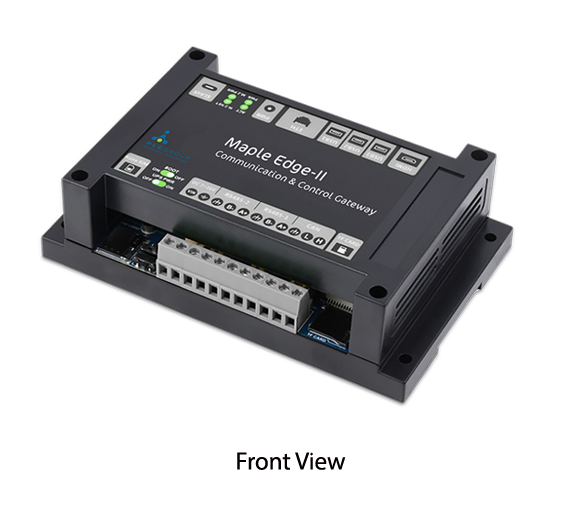
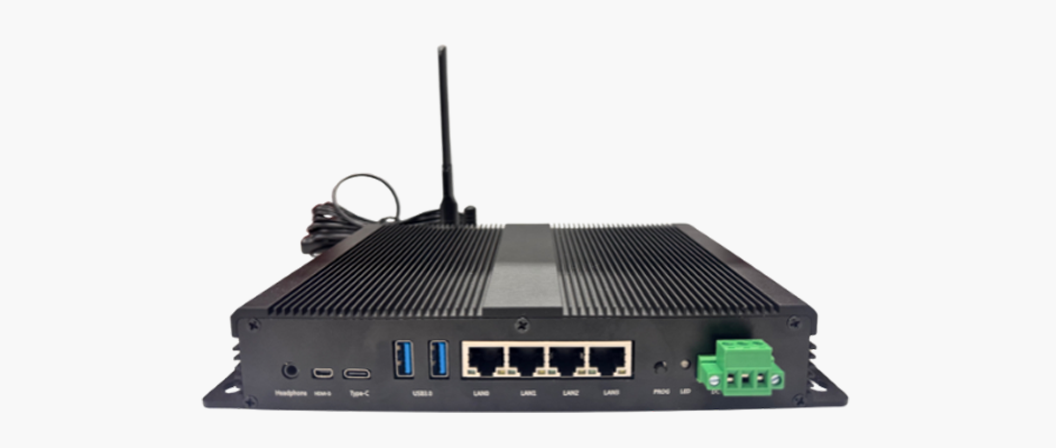
- Field hardware: Sensors, gateways, controllers, and energy meters installed at each site collect raw telemetry from both intelligent (communicating) equipment and legacy (non-communicating) assets. PLC Group’s hardware ecosystem supports open industrial protocols including Modbus, BACnet, SNMP, MQTT, and OPC UA, enabling seamless integration across multi-vendor environments.
- Edge processing: Onsite gateways and controllers process data locally, support dual-path connectivity, and maintain local data buffering so that monitoring continuity is preserved even during network interruptions.

- Centralized platform: A cloud or on-premises software platform aggregates telemetry from all connected sites, applies analytics models, triggers alarms, and enables remote configuration and control. PLC Group’s AxIn platform applies AI and machine learning to this data layer, delivering predictive maintenance intelligence and energy optimization recommendations.
- This closed-loop architecture enables remote monitoring and controlled response without continuous on-site presence, representing a fundamental shift from reactive maintenance to proactive asset management. As explored in What Is Industrial Remote Monitoring and Why It Matters for Modern Operations, organizations that make this shift gain control, resilience, and efficiency that compounds over time.
See the hardware behind the system. PLC Group’s gateways, universal controllers, sensors, and energy meters form the field foundation of every remote monitoring deployment. Explore the hardware ecosystem or book a consultation to discuss your site requirements.
Why Industrial Operations Cannot Afford to Operate Without Remote Monitoring
Organizations managing critical infrastructure operate in environments with very low tolerance for failure. Network operators, data center managers, utilities, and public safety operators all share a common requirement: assets must run reliably, 24 hours a day, seven days a week.
Without a remote monitoring system, operations teams are forced to depend on scheduled site visits, reactive fault responses, and incomplete data. This creates predictable and expensive blind spots.
As The Importance of Remote Monitoring and Control makes clear, operating without remote visibility is like piloting a plane with no instruments. Organizations cannot determine where they are, where they are headed, or what dangers lie ahead. The specific consequences include the following.
-
- Unplanned downtime. Equipment failures that are detectable through trend analysis go undetected until they cause service interruptions. By then, the cost of downtime, measured in SLA penalties, customer churn, and emergency dispatch, far exceeds what predictive monitoring would have cost.
- Rising energy spend. HVAC units running inefficiently, block heaters consuming fuel year-round, generators running unnecessarily: without visibility, none of these inefficiencies surface until they appear on the monthly energy bill. And even then, the data does not point to the cause.
- Lack of direction and accountability.Without a 360-degree operational view, organizations cannot set meaningful performance targets, track asset health trends, or assign accountability for facility conditions. Systems deteriorate not because of negligence but because there is no mechanism to detect gradual decline.

- Inability to plan. Capital and maintenance budgets depend on accurate data about asset condition and utilization. Without real-time data, organizations are estimating, and estimation leads to either over-investment or critical under-maintenance.
- Wasted field resources. Sending technicians to sites for periodic check-ins, fuel level verification, or generator exercise testing consumes substantial labor hours and travel costs. Many of these visits confirm that nothing is wrong, which represents cost with zero operational value.
The cumulative effect of these blind spots is significant. Organizations that lack comprehensive remote facility monitoring systems are not just inefficient; they are systematically overpaying for infrastructure that underperforms.
Find out what your blind spots are costing you. PLC Group offers a no-obligation consultation to assess your current monitoring gaps and identify the highest-ROI opportunities. Talk to an expert.
The Five Operational Cost Drains Remote Monitoring Eliminates
For remote site operators, particularly in telecom, utilities, and distributed critical facilities, operational cost leaks cluster around five recurring problem areas. Each one is a predictable consequence of limited visibility, and each one is directly addressable through industrial IoT solutions.
- Unplanned Generator Downtime
Backup generators are the last line of defense for network availability during power outages. Yet without remote monitoring, the failure modes that compromise genset reliability, including fuel depletion, battery degradation, block heater faults, and fuel leakage, can only be detected on-site or after the generator fails to start. By the time a technician discovers the problem, the outage has already occurred.
Remote generator monitoring eliminates this vulnerability. Real-time fuel level tracking, battery health diagnostics, block heater performance monitoring, and automated failure alerts allow operations teams to identify and address these issues before they affect network availability. Schedulable remote generator exercise testing eliminates the need for field visits while maintaining compliance with testing protocols.
- Fuel Theft and Unaccounted Fuel Loss
Fuel theft at remote sites is a significant and frequently underestimated cost for organizations managing large facility portfolios. Without real-time fuel visibility, theft goes undetected until the next scheduled site visit, by which point the losses can be substantial. Fuel leakage presents similar challenges: a slow leak at a remote site may go unnoticed for weeks without continuous monitoring, creating both financial loss and environmental liability.
Remote monitoring solutions with real-time fuel sensors eliminate the blind spot. Any deviation from expected consumption rates triggers an immediate alert, enabling rapid investigation and response before losses escalate.
- Inefficient HVAC and Cooling Operation
HVAC systems are the largest energy consumers at most telecom shelters and data center facilities. Without intelligent remote monitoring and control, HVAC units operate on fixed schedules that do not respond to actual thermal loads, ambient conditions, or occupancy patterns. Overcooling wastes energy. Undercooling creates thermal risk for sensitive equipment.
Legacy HVAC controllers compound the problem. They are typically non-communicating, configured only on-site, and incapable of relaying performance data to operations teams. This creates a fundamental barrier to remote management and optimization.
Industrial IoT solutions address this through smart universal controllers that communicate with both intelligent and legacy HVAC units, integrate weather forecast data to adjust set points dynamically, and feed real-time performance metrics to centralized monitoring platforms. The result is optimized cooling performance, reduced energy consumption, and extended equipment life, all managed remotely.

- Reactive Maintenance and Emergency Repair Costs
Scheduled preventive maintenance is less expensive than emergency repair. But for organizations managing dozens or hundreds of geographically distributed sites, preventive maintenance scheduling is difficult without data on actual asset condition.
Remote monitoring enables condition-based maintenance, triggering maintenance alerts based on actual equipment performance indicators rather than calendar schedules. Run-hours measurements, temperature trends, alarm frequency patterns, and load data all provide early warning of developing issues. Maintenance teams can prioritize interventions based on real asset health rather than arbitrary schedules, reducing both unnecessary maintenance visits and costly emergency callouts.
- Excessive Site Visit Costs
Every unnecessary site visit carries direct costs: vehicle expenses, labor hours, and the opportunity cost of time spent traveling rather than resolving issues. For organizations with remote facilities spread across large geographic areas, these costs accumulate rapidly.
A comprehensive remote monitoring system eliminates a substantial portion of these visits. Generator exercise testing can be performed remotely, on a schedule, with full test reports generated automatically. Fuel levels can be verified without dispatch. Alarm investigation can begin remotely before a technician is deployed, ensuring that when field resources are committed, they are directed to confirmed issues with the right parts and information.
Ready to eliminate unnecessary site visits and stop the cost leaks? PLC Group’s RMS as a Service model covers hardware, software, and managed monitoring under a single predictable monthly fee, with zero CAPEX required. Learn about RMS as a Service.
What a Remote Monitoring System Must Include to Deliver Real Value
Not all remote monitoring systems are equal. Organizations selecting an industrial IoT solution for critical facility management should evaluate platforms against these core capability requirements:
- Real-time visibility across all asset types. The platform must be able to connect both intelligent (communicating) and legacy (non-communicating) assets through appropriate sensors and protocol translation, eliminating partial visibility that creates blind spots.
- Multi-protocol support. Industrial environments contain equipment from multiple vendors communicating over different protocols. A capable remote monitoring system supports Modbus, BACnet, SNMP, MQTT, OPC UA, and other standard industrial protocols to ensure interoperability without requiring expensive equipment replacement.
- Predictive analytics and trend analysis. Real-time alerting addresses immediate issues. But the strategic value of industrial IoT solutions comes from trend analysis, identifying patterns in equipment behavior that predict failure weeks or months in advance, enabling planned maintenance rather than reactive response.
- Scalable architecture. Facility portfolios grow. The remote monitoring platform must support expansion from a handful of sites to thousands without architectural changes, using modular hardware and cloud-based software that scales on demand.

- Dual-path connectivity and local buffering. Remote facilities experience connectivity interruptions. A reliable remote monitoring system maintains local data buffering at the edge so that no telemetry is lost during network outages, and dual-path connectivity ensures that communication is restored automatically.
- Role-based access and secure remote configuration. Operations teams, maintenance staff, engineers, and management all require different views of facility data. Role-based access ensures that each stakeholder sees relevant information and that remote configuration capabilities are appropriately controlled.
- Ruggedized field hardware. Remote sites operate in harsh environments with extreme temperatures, humidity, dust, and physical exposure. Sensors, gateways, and controllers deployed in these environments must be rated for industrial conditions to deliver long-term reliability.
See how PLC Group’s AxIn platform checks every box. Built for multi-protocol, multi-site critical infrastructure, AxIn delivers real-time visibility, AI-driven predictive analytics, and remote control in a single unified platform. Explore the AxIn Platform.
Generator Remote Monitoring: A Case Study in Measurable ROI
Generator monitoring represents one of the clearest ROI cases for industrial IoT solutions, because the costs of poor visibility are highly visible and quantifiable.
Multi-system operators (MSOs) in telecommunications manage large portfolios of network sites that depend on backup generators to maintain service during grid outages. These generators face multiple failure modes: fuel depletion, fuel theft, battery failures, block heater faults, and startup failures. Each failure mode represents a potential network outage.
Historically, managing these risks required periodic field visits to manually test generators and verify fuel levels, third-party field service contracts for specialized testing, and reactive dispatch when alarms indicated problems, often after failures had already occurred.
PLC Group’s generator remote monitoring and control solution addresses each of these challenges directly. The platform supports both intelligent and legacy generators from all major manufacturers, including Generac, Kohler, Caterpillar, Cummins, and Deep Sea, through a single universal controller and gateway that replaces multiple vendor-specific units.

Deployed capabilities include real-time fuel level monitoring with theft detection, real-time battery fault detection, block heater energy optimization and failure detection, remote generator exercise testing with automated test reports, predictive maintenance alerts based on run-hours and performance trends, and consolidated alarm management delivered via SMS and email.
The operational impact is significant. Site visits for generator testing are eliminated or dramatically reduced. Fuel theft and undetected leakage are stopped at the source. Battery and block heater failures are caught before they prevent generator startup. And the ROI on the solution investment is typically achieved in fewer than 18 months, with ongoing OPEX savings continuing indefinitely.
Beyond the direct financial returns, the intangible benefits include improved network reliability, reduced carbon footprint from generator overconsumption, stronger customer retention through improved SLA performance, and faster, safer response to natural disaster scenarios.
Managing generators across multiple sites? PLC Group’s generator remote monitoring and control solution supports all major genset manufacturers under a single platform. See the Generator Monitoring solution or request a demo.
Industrial IoT Solutions Across Critical Industries
Remote monitoring systems and industrial IoT solutions are deployed across a range of critical infrastructure sectors where the combination of distributed assets, 24/7 uptime requirements, and limited on-site staffing creates an acute need for remote visibility and control.
- Telecommunications. Tower sites and telecom shelters operate in remote locations with minimal on-site staff. Remote monitoring enables continuous visibility into power systems, HVAC performance, fuel levels, battery health, and environmental conditions across thousands of sites simultaneously.
- Data Centers. Data center operators require precise environmental control, energy optimization, and predictive maintenance to protect sensitive equipment and meet SLA commitments. Remote facility monitoring systems deliver real-time visibility into cooling performance, power consumption, and equipment health with the analytical depth needed for PUE optimization.
- Cable Landing Stations. Coastal communication infrastructure operates in harsh environments where access is limited and failures carry extreme consequences. Remote monitoring provides continuous surveillance of environmental conditions, power systems, and cooling performance at these critical network chokepoints.

- Utilities and Renewable Energy. Distributed utility assets, including substations, renewable generation sites, and grid control infrastructure, require centralized monitoring for both operational efficiency and regulatory compliance. Industrial IoT solutions connect these distributed assets to centralized analytics platforms that support demand management, fault detection, and performance reporting.
- Public Safety Networks. Emergency communication infrastructure must perform reliably under the most demanding conditions, precisely when failures are least acceptable. Remote monitoring ensures that these facilities maintain continuous readiness through predictive maintenance and real-time performance visibility.
- Facilities Management. Commercial and industrial facility operators managing multi-site portfolios benefit from centralized remote monitoring to standardize environmental conditions, reduce energy spend, and eliminate unnecessary site visits across their entire portfolio.
From Reactive to Proactive: How PLC Group Delivers Industrial Remote Monitoring
PLC Group, established in 2014, provides integrated industrial IoT and remote monitoring solutions designed specifically for critical infrastructure management across North America and globally.
The company’s approach combines purpose-built hardware, including gateways, universal controllers, sensors, and energy meters, with the AxIn platform, a cloud-based actionable intelligence system powered by AI and machine learning. Together, these components deliver the complete remote monitoring stack: data acquisition at the edge, secure transmission to the platform, and advanced analytics that convert raw telemetry into operational decisions.
PLC Group’s remote monitoring solutions are delivered through flexible service models that address the full spectrum of organizational requirements. The RMS as a Service model eliminates CAPEX investment by bundling hardware, software, maintenance, and monitoring under a predictable monthly subscription. The Actionable Intelligence as a Service model applies AI analytics to existing data streams, delivering optimization recommendations without requiring new hardware deployment. Cooling as a Service delivers managed cooling infrastructure under a pay-per-use model, aligned to actual IT load consumption.
Across all delivery models, the mission is consistent: convert operational data into measurable financial value. Reduce energy consumption. Prevent unplanned downtime. Extend asset life. And give operations teams the visibility and control they need to manage critical infrastructure with confidence.
The Business Case for Remote Monitoring
Organizations managing critical infrastructure face a straightforward decision. They can continue operating with partial visibility, reactive maintenance, and the predictable costs of unplanned failures, wasted field resources, and energy inefficiency. Or they can deploy industrial IoT solutions that deliver continuous visibility, predictive intelligence, and remote control and systematically eliminate those costs.
The business case is clear. A well-implemented remote monitoring system reduces total facility cost of ownership, extends the useful life of critical assets, and delivers ROI within months rather than years. The five operational cost drains outlined above, including generator downtime, fuel loss, HVAC inefficiency, reactive maintenance, and excessive site visits, are not inevitable. They are the predictable consequence of operating without adequate visibility.
Remote monitoring system solutions from PLC Group give organizations the tools to see everything, control everything, and act before problems become outages.
To learn how PLC Group’s industrial IoT solutions can improve visibility, reliability, and performance across your critical infrastructure portfolio, contact the team at sales@plcgroup.com or call +1 855(752 4787).